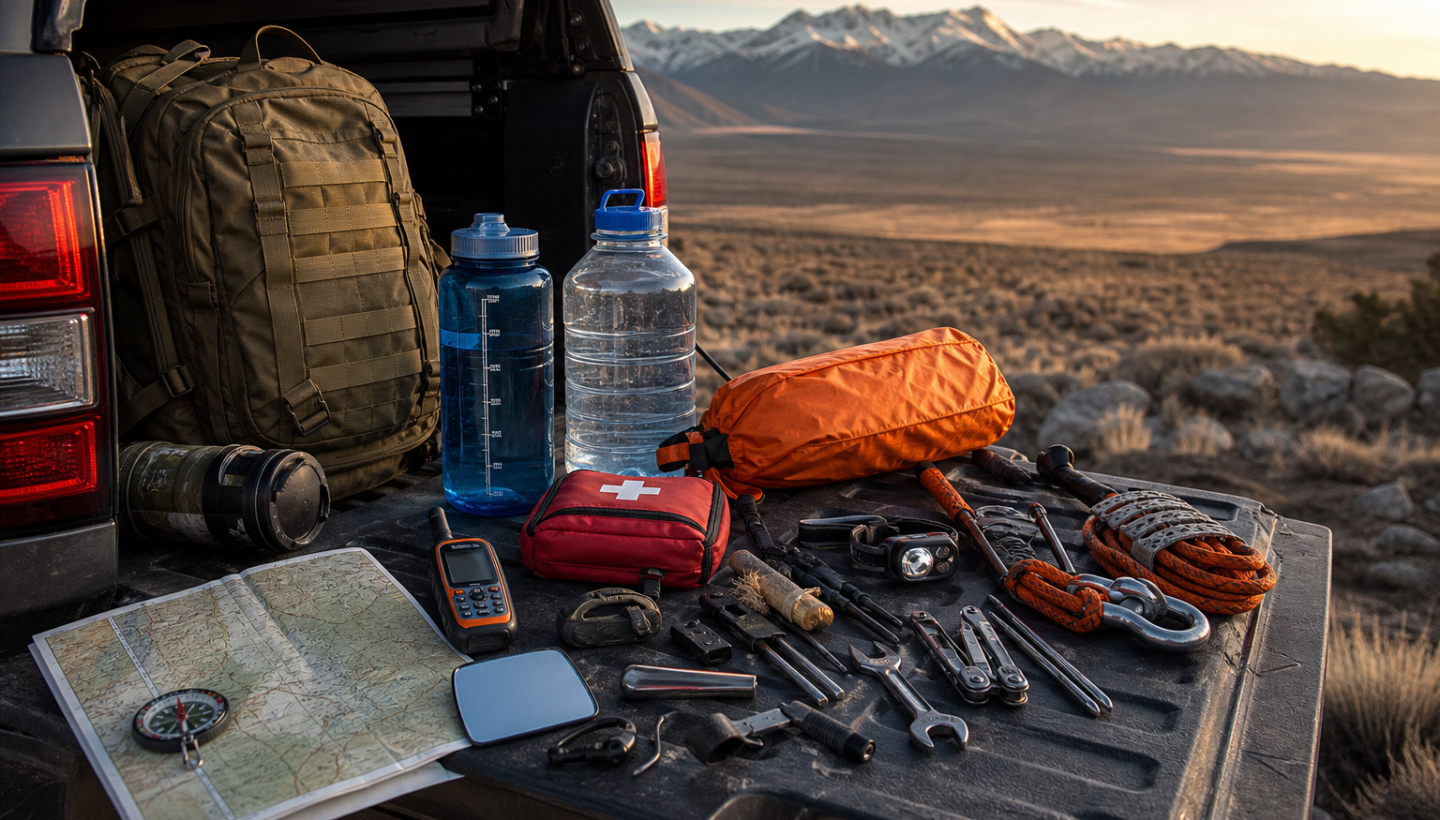
When help is more than a day away, your gear stops being “camping equipment” and becomes a survival system. Remote travelers, overlanders, off-grid campers, and backcountry nomads do not need to carry a warehouse of equipment, but they do need the right layers of capability: water, shelter, heat, navigation, communication, medical response, repair, signaling, and backup plans. The goal is not to pack for every possible disaster. The goal is to stay alive, stable, and locatable long enough to solve the problem or wait out rescue.
In remote country, small problems stack fast. A punctured tire becomes an overnight stay. Bad weather turns a minor delay into exposure risk. A dead battery means no heat, no lights, and no communication. The kit you carry should reflect one hard truth: if no one is coming today, you are the first responder.
Build Around the 24-Hour Reality
A good remote kit is not just a bug-out bag or a random box of survival gadgets. It should be built around practical questions:
- Can I stay hydrated if my main water source fails?
- Can I stay warm, dry, and shaded in bad weather?
- Can I communicate my location without cell service?
- Can I treat injuries until professional care is available?
- Can I repair my vehicle, shelter, pack, stove, or water system?
- Can I navigate if electronics fail?
- Can I make myself visible to aircraft, vehicles, or search teams?
Every item should earn its place. The strongest remote travel kits are simple, durable, familiar, and redundant where failure would be dangerous.
Water: Carry More Than You Think, Treat What You Find
Water is the first serious limiting factor in most remote emergencies. In hot, dry, windy, or high-altitude environments, a person can burn through a gallon per day quickly, and that does not include cooking, hygiene, wound cleaning, or radiator emergencies.
What to carry
- Primary water storage: Hard-sided jugs, vehicle tanks, or durable bladders sized for your route and climate.
- Personal emergency reserve: At least one separate bottle or bladder per person that does not get used for routine cooking or coffee.
- Water filter: A reliable backcountry filter or purifier appropriate for local water sources.
- Chemical treatment: Chlorine dioxide tablets or drops as a lightweight backup.
- Metal container: A stainless bottle or pot that can boil water if filtration fails.
The common mistake is carrying all water in one container or assuming the route will have reliable sources. Separate your reserve. If a jug cracks, a valve leaks, or a tank fitting fails, you still need a clean backup.
Shelter: Think Exposure, Not Comfort
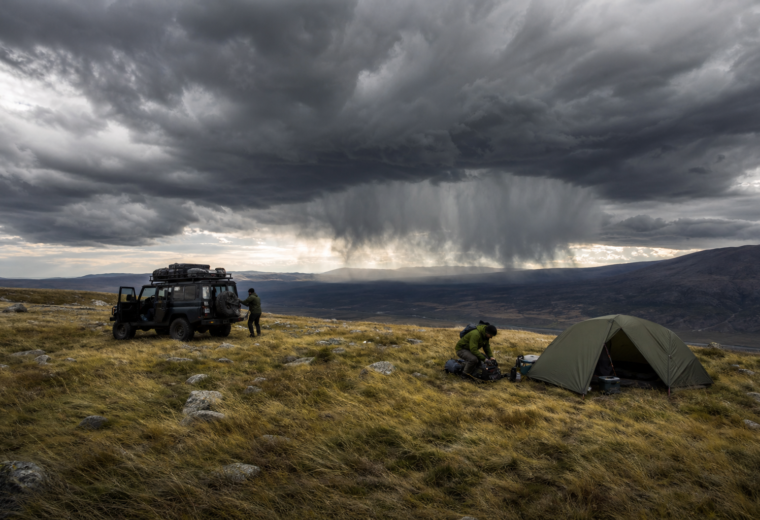
Shelter is about controlling exposure: wind, rain, cold, sun, insects, and ground temperature. Your vehicle may be your shelter, but do not depend on it entirely. A rollover, mechanical breakdown, broken window, or forced foot evacuation can separate you from your main sleeping setup.
Minimum shelter layers
- Weatherproof shell: Rain jacket, poncho, or bivy sack for each person.
- Insulation: Puffy jacket, fleece, wool layers, or climate-appropriate sleeping bag.
- Ground barrier: Closed-cell foam pad, compact sit pad, or emergency blanket.
- Shade system: Tarp, awning, reflective blanket, or shade cloth for desert and open terrain.
- Gloves and headwear: Warm hat, sun hat, and work gloves for handling repairs in bad conditions.
Do not underestimate wind and wet clothing. A mild temperature can become dangerous when you are damp, exhausted, and immobile after a breakdown. Cotton clothing is especially unforgiving in cold and wet conditions. Pack layers that still perform when conditions turn ugly.
Fire and Heat: Carry Multiple Ignition Methods
Fire can provide warmth, water purification, morale, signaling, and cooking. But in many environments, open flame is restricted or unsafe. Your fire kit should support both emergency heat and controlled use.
Carry at least three ways to make fire
- Primary: Butane lighter stored in a waterproof pouch.
- Backup: Stormproof matches or a second lighter.
- Last-resort: Ferro rod with a striker you have actually practiced using.
- Tinder: Waxed cotton, fire tabs, petroleum jelly cotton balls, or commercial tinder.
For vehicle-based travelers, also consider a compact stove and fuel that works in expected temperatures. Many people carry a stove but forget that some fuel canisters perform poorly in extreme cold. Know your fuel before you need it.
Food: Pack Simple Calories That Do Not Need Cooking
Food is rarely the most urgent survival need in the first 24 hours, but it matters for warmth, energy, decision-making, and morale. In a remote delay, you may need to dig, walk, repair, signal, or care for someone injured. That takes calories.
Best emergency food traits
- No cooking required: Bars, nut butter packets, jerky, trail mix, tuna packets, tortillas, dried fruit.
- High calorie density: Favor fats, nuts, and compact meals over bulky low-calorie snacks.
- Stable in heat and cold: Avoid foods that melt, freeze solid, or spoil easily.
- Easy to ration: Pack portions you can count and distribute.
Avoid relying only on freeze-dried meals. They are useful, but they require water, a stove, fuel, and time. Your emergency food should work even if you cannot cook.
Navigation: Electronics Are Tools, Not the Whole Plan
GPS apps and vehicle navigation systems are powerful, but batteries die, screens break, mounts fail, and software maps can be incomplete. Remote travel demands layered navigation.
Carry a navigation stack
- Offline digital maps: Download the full route area before leaving service.
- Paper maps: Regional road atlas, topographic map, or trail map in a waterproof sleeve.
- Compass: Simple baseplate compass and basic skill using it.
- Route plan: Written notes with fuel stops, water points, bailout roads, and expected travel times.
- Location discipline: Mark camps, junctions, hazards, and last-known-good positions.
The biggest navigation mistake is pressing deeper into unknown terrain because the screen says a road continues. In remote country, “road” may mean washed-out track, private gate, seasonal route, or impassable mud. Turn around before conditions become a recovery problem.
Communication: Plan for No Cell Service
If your emergency plan depends on a cell phone, you do not have a remote communication plan. Cell service disappears quickly in canyons, forests, mountains, deserts, and long rural corridors.
Communication essentials
- Satellite messenger: A two-way satellite communicator for SOS, check-ins, and text updates.
- Charged phone: Kept in airplane mode when not needed to conserve battery.
- Power bank: Dedicated backup power for communications, not shared casually with entertainment devices.
- Vehicle charging: 12V and USB charging options that do not rely on one cable or one port.
- Radio where appropriate: GMRS, ham radio, or CB depending on region, licensing, and group use.
Always leave a trip plan with someone reliable. Include your route, expected check-in times, vehicle description, license plate, group size, and when to call for help. A satellite SOS is excellent, but a responsible contact with your plan can shorten the search dramatically.
Medical Kit: Build for Bleeding, Breathing, Breaks, and Bad Days
A remote medical kit should go beyond adhesive bandages. You may need to stabilize someone for hours or overnight. Training matters as much as equipment, so take a wilderness first aid course if you regularly travel beyond fast rescue range.
Core medical supplies
- Bleeding control: Tourniquet, pressure bandage, hemostatic gauze, and gloves.
- Wound care: Irrigation syringe, antiseptic wipes, gauze pads, tape, and wound closure strips.
- Sprains and fractures: Elastic wrap, triangular bandage, compact splint, and pain relief medication.
- Medications: Personal prescriptions, antihistamines, anti-diarrheal, oral rehydration salts, and fever reducers.
- Protection: Nitrile gloves, CPR face shield, tweezers, trauma shears, and blister care.
Do not bury the medical kit under cargo. It should be reachable in seconds. Also, do not carry tools you do not know how to use. A tourniquet is lifesaving when applied correctly, but training and practice are essential.
Vehicle and Gear Repair: Mobility Is Survival
For overlanders and vehicle-based nomads, the vehicle is shelter, transport, power source, storage system, and sometimes communication hub. Keeping it moving can prevent an emergency from becoming a rescue operation.
Vehicle repair basics
- Tire gear: Full-size spare, tire plug kit, valve cores, valve tool, compressor, tire gauge, and jack that works on uneven ground.
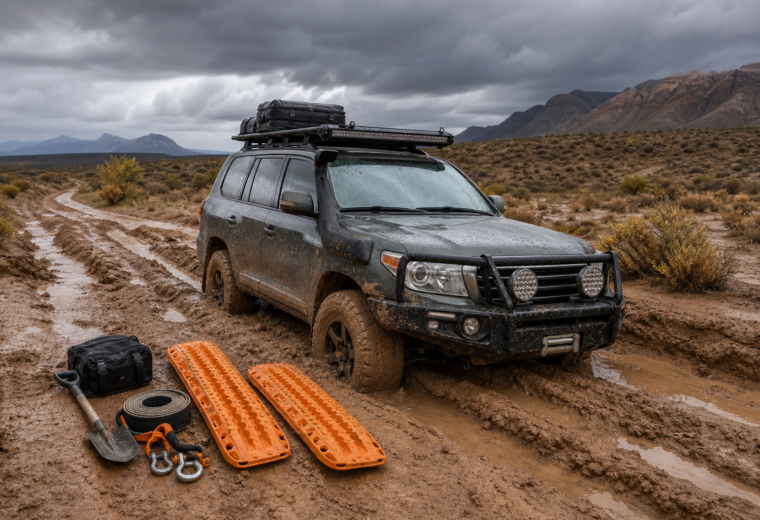
- Recovery gear: Shovel, traction boards, recovery strap, rated shackles, gloves, and a safe anchor plan.
- Fluids: Engine oil, coolant, brake fluid, and any vehicle-specific fluids that are hard to source remotely.
- Electrical: Jump starter, spare fuses, battery terminals, multimeter, and basic wire repair supplies.
- Tools: Socket set, wrenches, pliers, locking pliers, screwdrivers, utility knife, duct tape, hose clamps, zip ties, and epoxy putty.
Common mistake: carrying tools that do not fit your vehicle. Before a major trip, use your travel tool kit at home to change a tire, access the battery, remove common panels, tighten roof rack hardware, and check critical fasteners. If the kit cannot do the job in your driveway, it will not magically work in the rain at night.
Signaling: Make Yourself Easy to Find
In a remote emergency, being found is often more important than moving. Wandering away from a known location can expand the search area and increase risk. Unless staying put is dangerous, your vehicle or camp is usually the best signal platform.
Effective signaling tools
- Bright marker panel: Orange tarp, high-visibility fabric, or emergency signal panel.
- Signal mirror: Lightweight, reliable, and visible over long distances in sun.
- Whistle: Louder and more sustainable than shouting.
- Headlamp and strobes: Spare batteries and a flashing mode for nighttime visibility.
- Road markers: Reflective triangles, flares where legal and safe, or LED beacons.
Mark your location clearly. If you leave the vehicle to seek water, shade, or a better signal point, leave a note with direction, time, names, and intended return. Search teams need clues.
Personal Protection: Prepare for People, Animals, and Environment
Personal protection is not just about weapons. It includes situational awareness, legal knowledge, animal safety, secure storage, and avoiding unnecessary conflict. Remote places are usually safer than crowded ones, but isolation increases consequences.
Protection considerations
- Lighting: A strong handheld light and headlamp help identify problems before they are close.
- Deterrents: Bear spray where appropriate, stored accessible and used only with training.
- Camp discipline: Keep food secured, trash contained, and cooking areas clean.
- Legal compliance: Know local rules for firearms, knives, sprays, and restricted areas.
- De-escalation: Avoid confrontations over campsites, routes, noise, or strangers passing through.
The best protection is often prevention: arrive before dark, avoid sketchy camps, keep keys and shoes accessible, and trust your gut when a place feels wrong.
Weather Readiness: Pack for the Worst Plausible Conditions
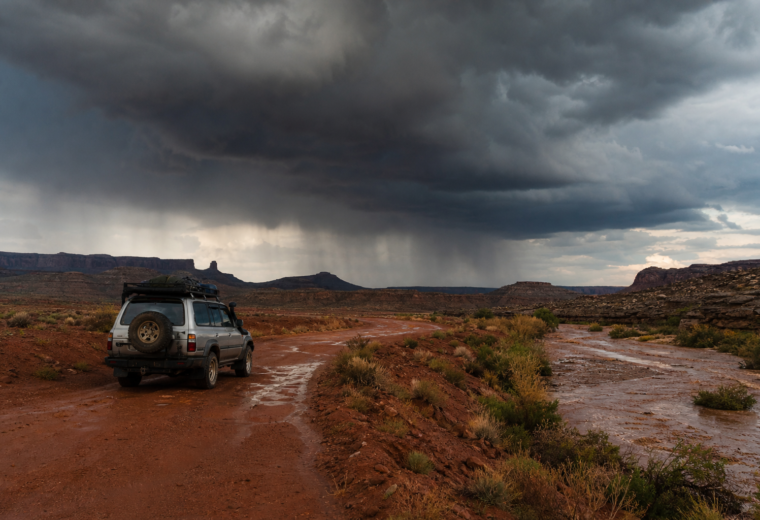
Weather is one of the main reasons a normal delay becomes dangerous. Roads wash out, heat drains water supplies, snow traps vehicles, and wind destroys cheap shelters. Pack for the worst plausible conditions, not the best forecast.
- Cold: Insulating layers, dry socks, sleeping insulation, gloves, and warm headwear.
- Heat: Shade, electrolytes, sun sleeves, wide-brim hat, and extra water capacity.
- Rain: Waterproof shell, dry bags, pack covers, and drainage awareness in camp.
- Wind: Strong stakes, guy lines, repair tape, and low-profile shelter setup.
- Snow or mud: Shovel, traction aids, boots, gaiters, and extra fuel margin.
Check weather before departure, but also read the landscape. Dry washes, burn scars, exposed ridgelines, clay roads, and creek crossings all tell you what the forecast might not.
Redundancy: Two Is One, but Weight Still Matters
Redundancy does not mean carrying three of everything. It means backing up failure points that would put you in serious danger. Prioritize redundancy in water, fire, navigation, communication, lighting, and medical essentials.
Smart redundancy examples
- Lighting: Headlamp, handheld light, and spare batteries.
- Water: Main storage plus personal reserve plus treatment method.
- Navigation: GPS app plus paper map plus compass.
- Communication: Phone plus satellite messenger plus written trip plan.
- Fire: Lighter plus matches plus ferro rod plus dry tinder.
Redundancy should be distributed. If one pack, drawer, or vehicle compartment is lost, soaked, stolen, or inaccessible, you should still have core survival capability elsewhere.
Key Takeaways
- Plan for delay, not disaster fantasy: Most remote emergencies start as breakdowns, weather delays, navigation mistakes, or injuries.
- Water, shelter, medical care, and communication come first: These determine whether you can last safely beyond 24 hours.
- Keep critical gear accessible: Medical kits, lights, satellite messengers, and warm layers should not be buried.
- Practice with your equipment: Gear you cannot use under stress is just cargo.
- Redundancy matters most at failure points: Back up the systems that keep you alive, found, and mobile.
Common Mistakes to Avoid
- Depending on cell service: Remote travel requires offline maps and non-cell communication.
- Carrying water without treatment: Stored water can be lost, contaminated, or used faster than expected.
- Buying a medical kit and never opening it: Know what is inside and add trauma supplies if missing.
- Leaving trip details vague: “Going camping out west” is not a rescue plan.
- Overpacking gadgets while ignoring basics: Shelter, water, fire, first aid, and repair tools beat novelty gear.
- Testing gear for the first time in an emergency: Set up the tarp, use the stove, filter water, plug a tire, and send a satellite message before the trip.
Field rule: If a piece of gear is important enough to bet your safety on, it is important enough to test before you leave pavement.
A Practical Remote Carry Checklist
- Water: Main supply, personal reserve, filter, chemical treatment, boil-capable container.
- Shelter: Rain shell, insulation, emergency bivy or tarp, ground barrier, sun protection.
- Fire and cooking: Lighters, matches, ferro rod, tinder, stove, fuel.
- Food: No-cook calories for at least 24 to 48 hours beyond planned travel.
- Navigation: Offline maps, paper map, compass, written route notes.
- Communication: Satellite messenger, phone, power bank, charging cables, trip plan left with contact.
- Medical: Trauma supplies, wound care, medications, splinting materials, gloves.
- Repair: Tire kit, compressor, jack, fluids, fuses, tools, tape, zip ties, hose clamps.
- Signaling: Whistle, mirror, bright panel, headlamp, spare batteries, road markers.
- Protection: Light, animal deterrent where appropriate, secure camp practices, legal awareness.
- Weather: Layers for cold, shade for heat, waterproofing, wind-resistant shelter setup.
- Redundancy: Backup methods for water, fire, navigation, communication, and lighting.
The right kit does not make you invincible. It buys time, options, and stability. When help is more than a day away, those three things matter more than almost anything else. Pack with intent, know your systems, and treat every remote trip as a chance to refine what works.
Related Resources
- Ready.gov Emergency Supply Kit — Official guidance on building a basic emergency kit with water, food, communication, and first aid essentials.
- National Park Service: Ten Essentials — A practical overview of the core systems every backcountry traveler should carry.
- American Red Cross First Aid Training — Training options for learning first aid skills before a remote emergency happens.
- National Weather Service Safety — Official weather safety information for heat, cold, storms, floods, lightning, and other field hazards.
- Tread Lightly! — Responsible recreation guidance for overlanders, off-road travelers, and anyone using public lands.