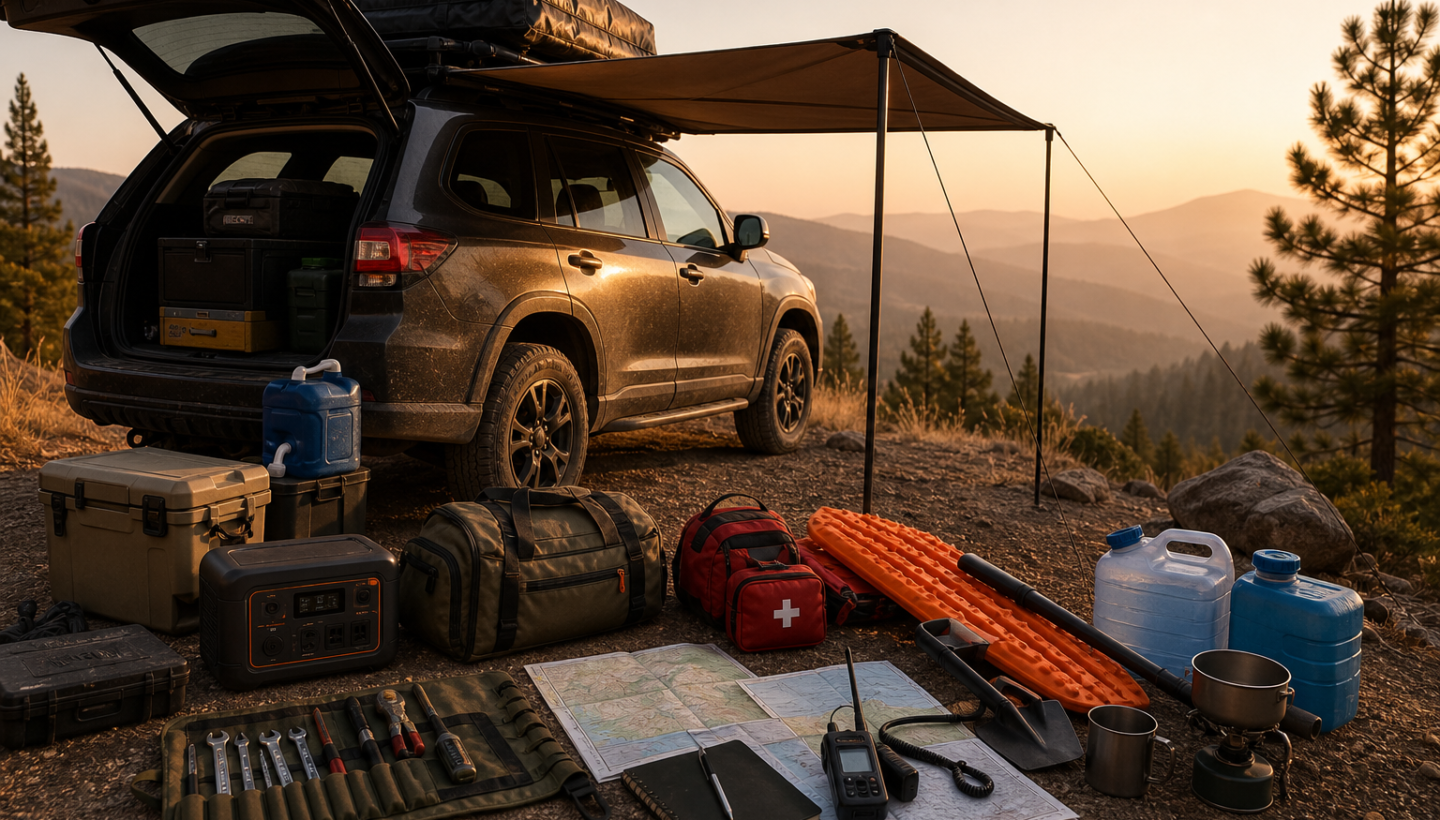
A good summer vehicle kit should not force you to choose between recreation and readiness. The same gear that makes a weekend campout smoother can also keep you safer during a wildfire evacuation, highway shutdown, mechanical breakdown, or grid-down detour. The key is building a system that is organized, heat-aware, and practical enough to live in your vehicle without becoming dead weight.
For overlanders, vanlifers, remote travelers, and preparedness-minded drivers, summer brings a specific risk profile: dehydration, heat illness, wildfire smoke, traffic-choked evacuations, tire failures on hot pavement, power-hungry cooling needs, and long delays far from services. A dual-purpose vehicle kit should support three missions: drive safely, stop safely, and live safely for at least 24 to 72 hours.
The Core Concept: Campout Comfort Meets Bug-Out Function
A campout kit is usually built around comfort: cooking, sleeping, shade, lighting, and convenience. A bug-out kit is built around continuity: water, fuel, documents, communication, medical care, and mobility. The best summer vehicle kit overlaps both worlds.
Think in layers:
- Always-in-vehicle essentials: Water, first aid, tools, fire extinguisher, lights, power bank, maps, gloves, and emergency food.
- Seasonal summer module: Extra water, shade, cooling towels, sun protection, electrolyte mix, smoke masks, and lightweight clothing.
- Trip-specific camp module: Shelter, sleep system, stove, food bin, camp kitchen, chairs, and comfort items.
- Family or pet module: Medications, pet water bowls, child supplies, extra hygiene items, and comfort gear.
This layered approach keeps the daily kit manageable while allowing you to scale up quickly before a remote trip, heat wave, or evacuation warning.
Water: The Non-Negotiable Summer Loadout
In summer, water is not just for drinking. It is for cooling, wound cleaning, cooking, pets, handwashing, and radiator emergencies. Most people carry too little.
A practical baseline is one gallon per person per day, with more for desert travel, pets, strenuous activity, or remote routes. For a vehicle kit, combine durable storage with portable containers.
Recommended water setup
- Primary storage: 2.5 to 7-gallon water jug with a secure cap or spigot.
- Personal bottles: One insulated bottle per person for easy access while driving or hiking.
- Backup water: Sealed emergency water pouches or bottles stored out of direct sunlight.
- Treatment: Water filter, purification tablets, or both for backcountry resupply.
- Electrolytes: Powder packets or tablets to reduce dehydration risk during heavy sweating.
Avoid storing flimsy disposable bottles in hot cargo areas for months. Rotate water regularly, keep containers shaded, and use rugged jugs that can survive vibration and rough roads.
Food: Simple, Shelf-Stable, and Heat-Tolerant
Summer food storage is tricky because heat destroys quality and shortens shelf life. Skip chocolate-heavy snacks and anything that turns into paste in a hot vehicle. Choose foods that can handle temperature swings and require little preparation.
Good vehicle food options
- Meal bars with moderate sugar and high protein
- Nut butter packets
- Jerky or meat sticks
- Tuna or chicken pouches
- Crackers or hardtack-style emergency rations
- Instant rice, couscous, or dehydrated meals for camp use
- Trail mix without melt-prone chocolate
- Electrolyte drink mixes and oral rehydration salts
Keep a small “no-cook” food pouch accessible from the driver’s seat or rear hatch. Your stove may be packed deep, banned during fire restrictions, or unsafe to use in high winds.
Shelter, Shade, and Cooling
In cold-weather kits, shelter is about staying warm. In summer, shelter is about staying out of the sun, moving air, and lowering body temperature. A vehicle can become dangerously hot within minutes, so your kit should create shade outside the vehicle and ventilation inside it.
Summer shelter and shade checklist
- Compact tarp, awning, or shade sail with guy lines and stakes
- Wide-brim hats and UV-rated sun shirts
- Cooling towels or bandanas
- Reflective windshield shade
- Mesh window screens or bug netting for ventilation
- Lightweight sleeping sheet or summer quilt
- Ground pad or compact cot for sleeping outside the vehicle if needed
If you travel in wildfire country, consider where you park. Avoid tall dry grass, keep exhaust components away from vegetation, and do not assume a scenic pullout is safe if fire weather is active.
Power: Manage the Summer Energy Load
Summer travel puts extra strain on your power system. Phones overheat, fridges run harder, fans stay on longer, and navigation devices may be active for hours during detours or evacuations. Build redundancy into your power plan.
Practical power kit
- High-capacity USB power bank for phones and headlamps
- 12V charging cables for all critical devices
- Portable jump starter rated for your vehicle
- Solar panel or folding solar charger for longer trips
- Spare fuses and basic electrical repair items
- Headlamps with extra batteries or rechargeable cells
If you run a fridge, test how long your battery system can support it in hot weather. A setup that works in spring may struggle during a 100-degree afternoon. Keep fridges shaded, ventilated, and organized so you are not opening them constantly.
Communications and Navigation
During summer emergencies, cell networks can become overloaded, damaged, or unavailable in remote terrain. A good vehicle kit does not rely on one screen and one signal.
Communication essentials
- Fully charged phone with offline maps downloaded
- 12V and wall chargers
- GMRS or FRS radios for vehicle-to-vehicle travel
- Satellite messenger or personal locator beacon for remote routes
- Written contact list with phone numbers and addresses
- NOAA weather radio or weather-capable handheld radio
Navigation essentials
- Paper road atlas for your region
- Topographic maps for backcountry routes
- Compass
- Pre-planned fuel stops and alternate routes
- Evacuation route notes for home, work, and common travel corridors
Before leaving pavement, download maps for offline use and identify bailout routes. During a wildfire or flood event, your preferred scenic route may be closed without warning.
First Aid and Heat Illness Readiness
A basic first aid kit is a start, but summer travel calls for heat-specific and trauma-aware additions. Heat exhaustion and dehydration can develop quickly, especially in children, older adults, pets, and anyone working hard in direct sun.
First aid additions for summer
- Instant cold packs
- Oral rehydration salts
- Burn gel and sunburn relief
- Blister care
- Elastic wrap and triangular bandage
- Trauma dressing and tourniquet
- Nitrile gloves
- Antihistamine for bites and allergic reactions
- Personal medications with a rotation schedule
Know the difference between discomfort and danger. Confusion, fainting, hot dry skin, or a rapid decline in coordination can signal a serious heat emergency. Shade, cooling, hydration, and rapid medical care matter.
Fire Safety and Wildfire Smoke
Summer vehicle kits should assume fire restrictions are possible. That means you may not be able to use a campfire, charcoal grill, or even some stove setups depending on local rules. Pack accordingly.
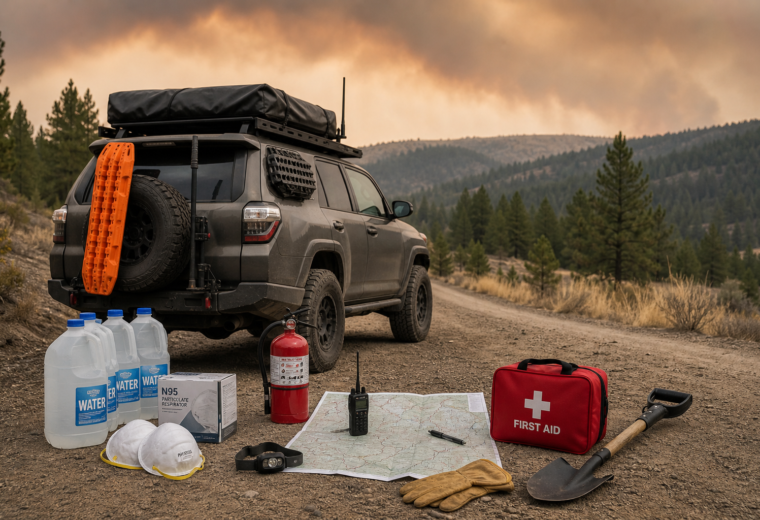
Fire and smoke gear
- Vehicle-rated fire extinguisher mounted within reach
- Leather gloves
- Small shovel or entrenching tool
- Fire blanket
- N95 or P100 masks for wildfire smoke
- Eye protection
- Battery or rechargeable lanterns instead of flame lighting
Do not use a fire extinguisher as an excuse to take risks. If a vehicle fire, grass fire, or campfire escape is growing, move away and call emergency services. Gear is for small, early-stage problems, not heroic firefighting.
Tools, Repairs, and Recovery Gear
A breakdown in summer can become a heat emergency. Your tool kit should help you fix small problems, stabilize the vehicle, or safely wait for help.
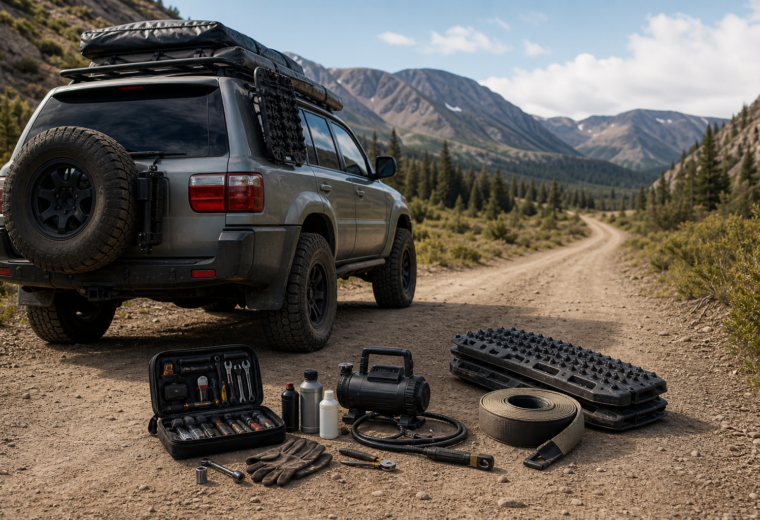
Basic vehicle tool kit
- Tire pressure gauge
- Portable air compressor
- Tire plug kit
- Breaker bar or proper lug wrench
- Work gloves
- Duct tape and high-temperature tape
- Zip ties and baling wire
- Multitool and fixed-blade knife
- Headlamp
- Spare fuses, hose clamps, and basic fluids
Recovery gear for remote routes
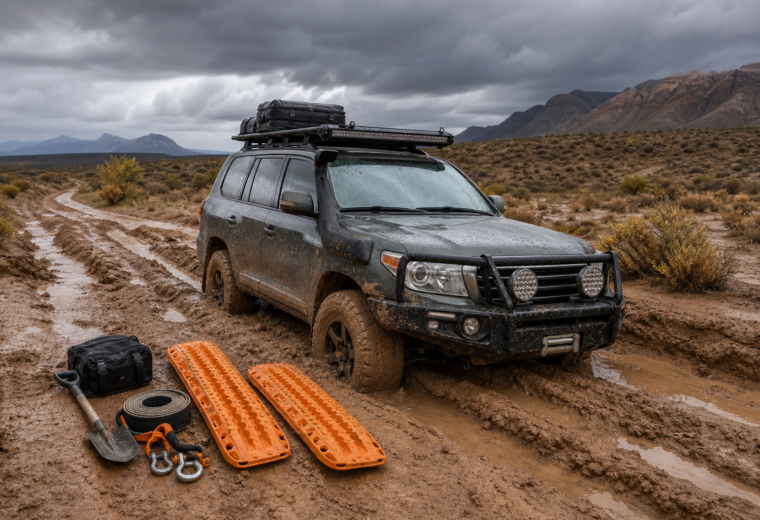
- Recovery boards
- Rated tow strap or kinetic rope appropriate for your vehicle
- Soft shackles or rated hardware
- Shovel
- Traction gloves
- Jack base plate for sand, mud, or soft shoulders
Recovery gear is only useful if it is rated, accessible, and understood. Practice with it before you are stuck in a hot wash, soft shoulder, or crowded evacuation route.
Hygiene and Sanitation
Cleanliness becomes more important when heat, sweat, dust, and limited water combine. A simple hygiene kit helps prevent rashes, stomach issues, and general misery.
- Biodegradable wipes
- Hand sanitizer
- Small bottle of biodegradable soap
- Toilet paper in a waterproof bag
- Waste bags and sealable trash bags
- Trowel where catholes are legal and appropriate
- Menstrual supplies
- Quick-dry towel
Pack out waste when required, and do not assume every roadside stop or campground will have working restrooms during peak summer travel or emergency conditions.
Clothing and Personal Protection
Summer clothing should manage sun, sweat, insects, and sudden weather changes. Even in hot climates, long sleeves and pants can be safer than exposed skin when sun and brush are intense.
Clothing kit
- Lightweight long-sleeve sun shirt
- Quick-dry pants or durable trail pants
- Extra socks
- Wide-brim hat
- Lightweight rain shell
- Work gloves
- Closed-toe shoes or boots
- Buff or bandana
- Sunglasses with UV protection
Keep at least one complete change of clothes in a dry bag. If you are forced to sleep in the vehicle, change a tire, or walk for help, the right clothing becomes safety gear.
Documents, Cash, and Identity
Bug-out situations often fail at the paperwork level. If you need fuel, lodging, medical care, animal boarding, or re-entry after an evacuation, documents matter.
Document pouch checklist
- Driver’s license and vehicle registration copies
- Insurance documents
- Emergency contact list
- Medical information and medication list
- Pet vaccination records
- Copies of key IDs in a sealed pouch
- Local maps and written evacuation notes
- Small amount of cash in mixed bills
Cash still matters when card readers are down, networks are congested, or small rural stops are operating offline. Keep it hidden, separated, and reserved for emergencies.
Family and Pet Considerations
A kit built for one driver may fail when passengers are added. Children, older adults, and pets increase water needs, cooling needs, medical needs, and planning complexity.
Family and pet additions
- Extra water specifically allocated for pets
- Collapsible bowls
- Leashes, harnesses, and pet carriers
- Pet food and medications
- Comfort item for children
- Diapers, wipes, and child-safe sunscreen if needed
- Hearing protection for loud environments
- Spare glasses or contacts
- Written reunification plan for family members
Never leave children or pets in a parked vehicle in summer heat. Even a short stop can become dangerous faster than expected.
How to Pack the Kit So It Actually Works
Organization is what separates useful gear from cargo clutter. Pack by function, not by wishful thinking.
- Keep critical safety gear accessible: Fire extinguisher, first aid, headlamp, gloves, and water should not be buried under camp chairs.
- Use labeled bins or bags: Water, food, tools, hygiene, power, and shelter should be easy to identify in low light.
- Balance weight: Heavy water and recovery gear should ride low and secure.
- Protect from heat: Medications, batteries, food, and electronics should be shaded or rotated often.
- Inspect monthly: Check leaks, expired food, battery charge, tire tools, and missing items.
Field rule: If you cannot reach it in the dark, in the rain, or on the shoulder of a busy road, it is not packed correctly.
Short Key Takeaways
- A strong summer vehicle kit should support both planned camping and unplanned evacuation or breakdown scenarios.
- Water, shade, cooling, communication, and vehicle mobility are the highest-priority summer categories.
- Heat changes everything: rotate food, protect batteries, carry electrolytes, and plan for more water than you think you need.
- Wildfire smoke, fire restrictions, and traffic evacuations require masks, maps, fuel planning, and alternate routes.
- Accessible organization is as important as the gear itself.
Final Field Check
Before your next summer trip, open the rear hatch and audit your kit honestly. Can you drink, cool down, communicate, navigate, treat injuries, fix a tire, sleep safely, and move again if conditions change? If the answer is yes, you have more than a camp kit. You have a mobile safety system built for real roads, real heat, and real uncertainty.
Related Resources
- Ready.gov: Car Emergency Kit — Official guidance for building a practical vehicle emergency kit for roadside delays and evacuations.
- National Weather Service: Heat Safety — Clear information on heat illness, warning signs, and safe behavior during extreme heat.
- AirNow: Wildfires and Smoke — Current wildfire smoke information and health guidance from U.S. government agencies.
- NHTSA: Tire Safety — Tire maintenance and safety guidance that is especially useful before long summer road trips.
- American Red Cross: Wildfire Safety — Preparedness steps for wildfire evacuation, smoke exposure, and family emergency planning.