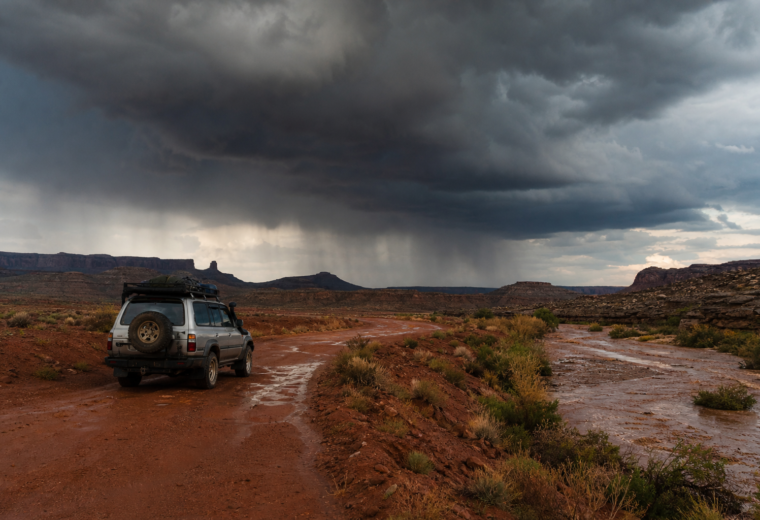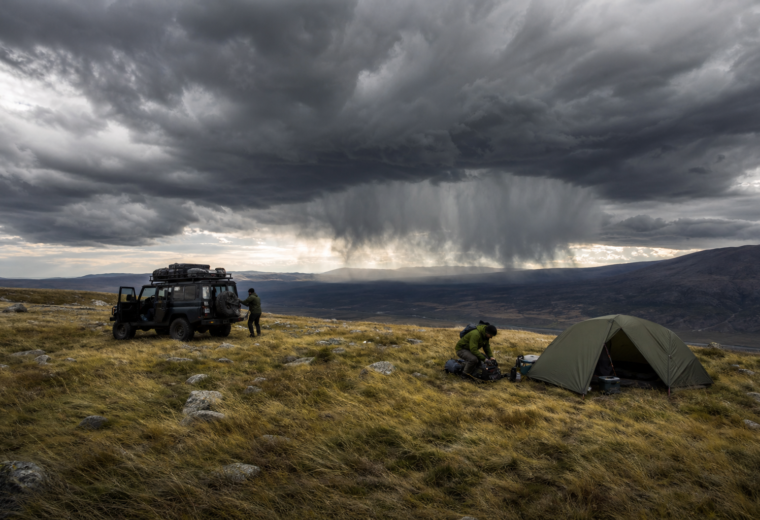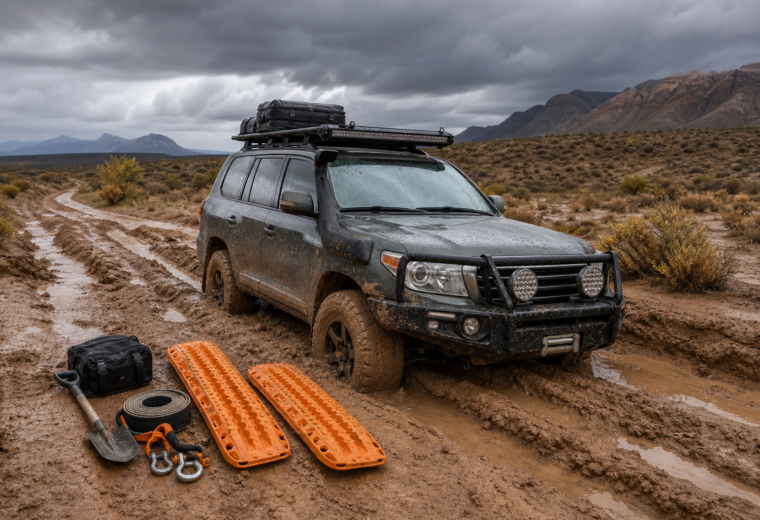

Knowing outdoor terms in plain language makes trips safer and more enjoyable. Whether you’re a vanlifer setting up camp in a new boondocking spot, an overlander navigating remote dirt roads, or a weekend backpacker, this glossary organizes common outdoor words by topic: camping, navigation, water, cooking, power, and safety. Each section gives short definitions and practical field tips you can use immediately.
Camping basics
Pitch / Pitching
Pitch means to set up a tent. It includes choosing a flat spot, clearing debris, orienting the door, and staking or securing the tent walls and rainfly.
Fly / Rainfly
Rainfly is a waterproof cover that goes over a tent to protect against rain and wind. Some minimalist shelters use a separate tarp as a rainfly.
Vestibule
A vestibule is the covered area outside a tent’s main body used to store gear, shoes, and cooking pots without bringing dirt inside.
Footprint
A footprint is a groundsheet custom-sized to a tent’s floor that protects fabric from abrasion and moisture.
Boondocking / Dispersed camping
Boondocking (or dispersed camping) is camping outside developed campgrounds, often without hookups or amenities. It’s common for vanlifers and overlanders.
Leave No Trace (LNT)
Leave No Trace is a set of principles to minimize impact: plan ahead, camp on durable surfaces, dispose of waste properly, leave what you find, minimize campfire impacts, respect wildlife, and be considerate of others.
When in doubt, choose a durable surface, pack out what you pack in, and keep fires small or use a stove.
- Field tip: Pick a sheltered spot away from drainage lines and hazards; stake corners into soil if you expect wind.
- Field tip: Use a footprint or tarp under tents to prevent punctures and condensation buildup.
Navigation
Waypoint
A waypoint is a saved location in a GPS unit or app used for navigation and route planning.
Bearing / Azimuth
Bearing (or azimuth) is the compass direction from your position to a destination, usually given in degrees (0–360°).
Declination
Declination is the difference between true north (geographic) and magnetic north. Adjust compass bearings to account for local declination.
Topo / Contour lines
Topographic maps show elevation with contour lines. Close lines mean steep terrain; spaced lines mean gentler slopes.
Track / Breadcrumb
A track or breadcrumb trail is the route recorded by a GPS as you move; useful for returning along the same route or analyzing where you went.
- Field tip: Always carry a paper map and compass as backups; electronics fail when wet, cold, or depleted.
- Field tip: Before leaving cell coverage, download offline maps and mark at least two waypoints: camp and a known exit point.
Water
Potable
Potable water is safe to drink without treatment. If in doubt, treat water before consuming.
Filter
Filters remove bacteria, protozoa, and particulates by pushing water through filter media. Most do not remove viruses unless they include a specific membrane or ultrafiltration.
Chemical treatment
Chemical treatments (iodine, chlorine dioxide) disinfect water by killing pathogens. They require dwell time and are a lightweight, reliable option.
UV treatment
UV purifiers use ultraviolet light to neutralize microorganisms. They’re fast and effective but require batteries and clear water (pre-filter turbid water).
Catchment / Graywater
Catchment systems collect rainwater. Graywater is wastewater from sinks and showers; follow local rules on disposal and avoid contaminating natural sources.
- Field tip: Pre-filter murky water with a cloth or coffee filter before using a pump filter or UV device.
- Field tip: Carry a small emergency chemical treatment even if you use a filter—good backup for frozen or clogged filters.
Cooking
Stove types
Common camping stoves: canister (propane/isobutane), liquid fuel (white gas), alcohol, and wood-burning. Choose by fuel availability, cold-weather performance, and simmer control.
Simmering
Simmering means cooking at low heat. Some stoves with strong flames (canister or white gas) need windshields or flame control to simmer properly.
Pot cozy
A pot cozy is an insulated wrap used to retain heat and finish cooking food without fuel.
Windscreen
A windscreen improves stove efficiency by blocking wind and reflecting heat toward the pot.
- Field tip: Boil water with a lid on and use a pot cozy to save fuel.
- Field tip: Store fuel canisters upright and keep spare fuel in a cool, dry place when overlanding or van camping.
Power
Battery bank / Amp-hours (Ah)
Battery bank refers to the house batteries you use for lights, fridge, and devices. Capacity is measured in amp-hours (Ah), which estimate how long a battery can deliver a set current.
Inverter
An inverter converts DC battery power to AC for household-style plugs. Pure sine-wave inverters handle sensitive electronics better than modified sine wave units.
MPPT / Charge controller
MPPT (Maximum Power Point Tracking) is a type of solar charge controller that optimizes solar panel output to charge batteries more efficiently than basic PWM controllers.
Shore power / Alternator charging
Shore power is plugged-in AC power at a campground. Alternator charging uses your vehicle engine to top up batteries while driving.
- Field tip: Match battery capacity to your daily energy needs; track watt-hours, not just Ah, for mixed voltage systems.
- Field tip: Use an MPPT controller with solar and a smart DC-to-DC charger for efficient alternator charging while driving.
Safety
PLB / Personal locator beacon
A PLB is a dedicated emergency beacon that transmits your location to search-and-rescue satellites when activated. It’s reliable and low maintenance.
SPOT / Satellite messenger
Satellite messengers like SPOT or devices from Garmin provide two-way messaging and tracking, often with SOS features and optional subscription plans.
Weather watch vs. warning
A watch means conditions are favorable for hazardous weather; a warning means hazardous weather is occurring or imminent. Always take warnings seriously—especially for flash floods, wildfire smoke, or winter storms.
Hypothermia / Heatstroke
Hypothermia is when core body temperature drops too low; heatstroke is life-threatening overheating. Both require immediate first-aid and often rapid evacuation.
Bear hang / Bear canister
A bear hang suspends food and scented items from a tree; a bear canister is a hard-sided container designed to be bear-resistant. Use whichever method is recommended by local regulations.
- Field tip: Carry a compact first-aid kit tailored to your trip and know how to treat major issues: bleeding, fractures, hypothermia, and allergic reactions.
- Field tip: Tell someone where you’re going and when you’ll return. If you have a PLB or satellite messenger, register it and check battery status before leaving cell coverage.
Quick terminology cheat-sheet
- Pitch — set up your tent.
- Waypoint — saved GPS location.
- Potable — safe to drink.
- Canister stove — cartridge-fueled stove type.
- MPPT — efficient solar charge controller.
- PLB — emergency beacon for rescue.
- Leave No Trace — principles to minimize impact.
Key takeaways
- Learn a few core terms in each category—camping, navigation, water, cooking, power, safety—to reduce confusion and increase confidence outdoors.
- Keep simple backups: paper map, compass, chemical water treatment, basic first-aid kit, and a charged emergency beacon or messenger.
- Practice Leave No Trace and routine gear checks to protect both your trip and the places you visit.
This glossary covers the common words you’ll hear around campgrounds, trailheads, and boondocking sites. Use it as a reference, and over time these terms will become second nature—helping you plan smarter, travel further, and stay safer on the road.