
Building shelters using natural materials is a time-honored practice that combines resourcefulness, environmental awareness, and practical survival skills. Whether you are an outdoor adventurer, a survivalist, or someone passionate about off-grid living, mastering innovative shelter-building techniques using what nature provides can significantly enhance your comfort, safety, and resilience in the wilderness. In this article, we explore creative and practical methods for constructing durable shelters, focusing on materials readily available in most environments and strategies that balance protection, sustainability, and ease of assembly.
Why Choose Natural Materials for Shelter Building?
Natural materials offer numerous advantages when building shelters in outdoor environments. First, they are often locally accessible, reducing the need to carry bulky equipment or rely on manufactured gear. This can be especially valuable for minimalist hikers and nomads. Second, natural materials tend to blend with the environment, providing better camouflage and a lower ecological footprint. Finally, many natural materials possess inherent insulating and weather-resistant properties, making them ideal for long-term or emergency shelters.
However, success depends on understanding the properties of different materials and how they can be combined to create structures that withstand wind, rain, cold, and heat. Let’s examine some of the most effective natural materials and construction techniques used in innovative shelter building.
Key Natural Materials for Shelter Construction
Wood and Branches
Wood is arguably the most versatile natural building material. Depending on the environment, you can find a variety of branches, logs, and sticks that serve different structural functions.
- Framework: Larger, sturdier branches or small logs form the skeleton of the shelter. They provide stability and support for the roof and walls.
- Weaving and Reinforcement: Smaller, flexible branches can be woven between the frame to create walls or used as lashing materials.
Leaves, Pine Needles, and Grass
These materials are excellent for insulation and weatherproofing. Layering leaves or pine needles can help keep out moisture and provide thermal insulation. Grass can also be bundled and tied to create roofing mats or bedding.
Bark
Bark from certain trees, such as birch or cedar, can be stripped in large sheets and used as durable roofing or wall panels. Bark is naturally resistant to water and decay, making it ideal for longer-lasting shelters.
Earth and Clay
When available, earth and clay can be combined with organic materials to create thick, insulating walls. Techniques such as cob or wattle and daub involve mixing clay with straw or grass to produce a sturdy and weather-resistant surface.
Vines and Natural Cordage
Strong, flexible vines or roots can be harvested and twisted into ropes or lashing materials, crucial for binding structural elements together.
Innovative Shelter Designs Using Natural Materials
1. Debris Hut
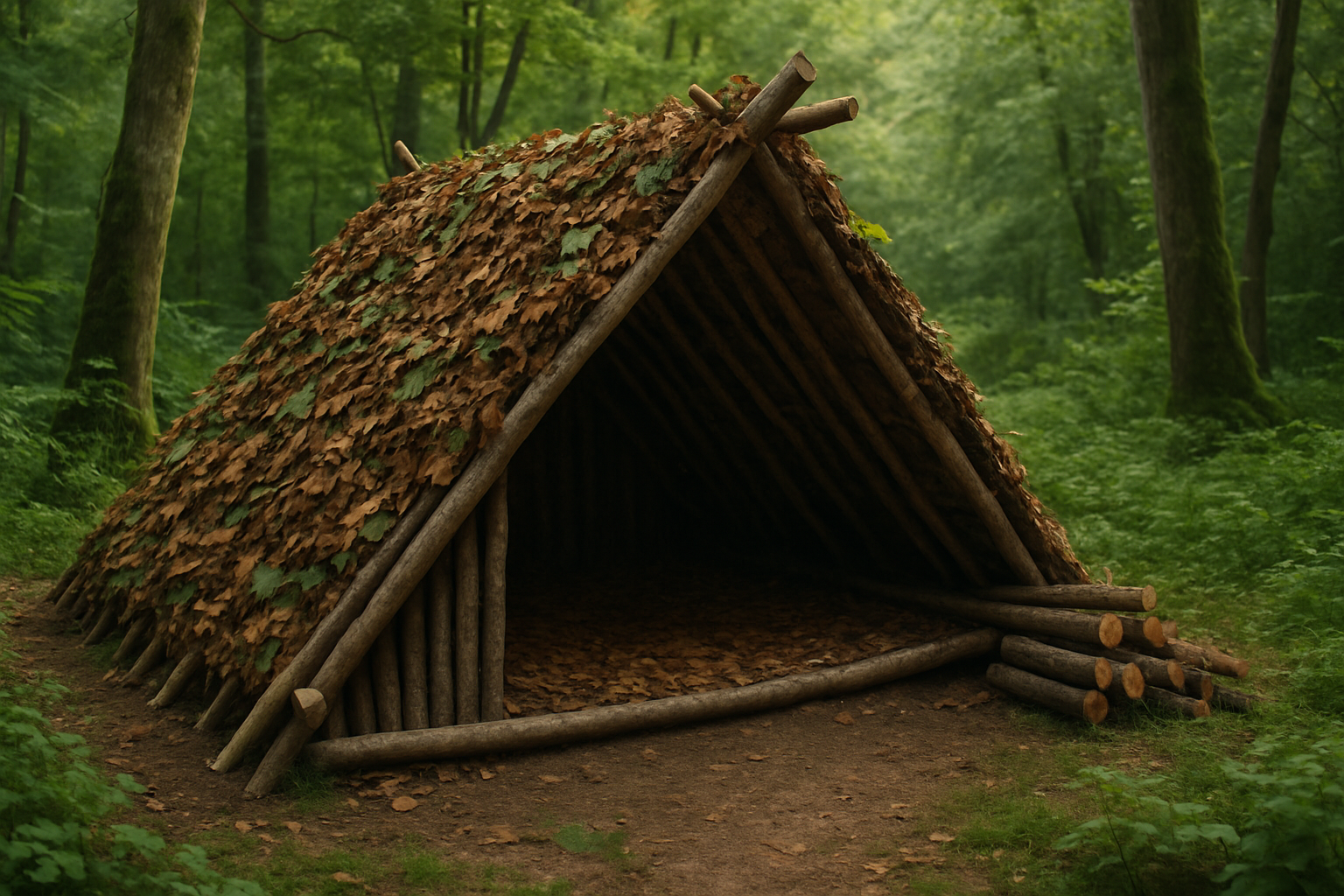
The debris hut is a classic survival shelter that relies heavily on leaves, branches, and natural insulation. It is quick to build and offers excellent protection from wind and rain when properly constructed.
- Construct a sturdy frame using a long, thick branch as a ridgepole, supported by two forks or stacked rocks.
- Lean smaller branches against the ridgepole to form a triangular frame.
- Cover the frame with layers of leaves, pine needles, or grass, aiming for a depth of at least 12 inches to provide insulation.
- Fill the interior floor with dry leaves or grass for insulation and comfort.
2. Wattle and Daub Shelter
This ancient technique uses woven branches (wattle) coated with a mixture of clay, mud, and straw (daub) to create solid walls.
- Build a frame of vertical stakes driven into the ground.
- Weave flexible branches horizontally between the stakes to form a lattice wall.
- Apply the daub mixture generously to seal gaps and create a durable, weatherproof surface.
- Finish with a thatched roof made from leaves or grass for additional protection.
3. Lean-To with Bark Roofing
A lean-to shelter is simple and effective, especially when enhanced with bark roofing for waterproofing.
- Find a sturdy support such as a fallen tree or build a framework from branches.
- Lean branches at an angle against the support to create a sloped roof.
- Cover the branches with large sheets of bark, overlapping them like shingles to shed water.
- Add a wall of woven branches or leaves on the open side to block wind.
4. Earth Berm Shelter
In colder climates or for longer-term stays, earth berm shelters provide excellent insulation and protection.
- Dig a shallow pit or trench to lower the shelter’s profile.
- Construct a frame from wood or branches over the pit.
- Cover the frame with bark, leaves, or grass mats.
- Pile earth and clay over and around the shelter to create thick insulating berms that retain heat and block wind.
Practical Tips for Building with Natural Materials
- Scout Your Location: Look for naturally abundant materials nearby to minimize effort and impact.
- Choose Durable Materials: Prioritize wood and bark from resilient tree species that resist rot and pests.
- Layer for Insulation: Use multiple layers of leaves or grass to trap air and improve thermal protection.
- Secure Joints Well: Use natural cordage or vines to tightly lash structural elements; this increases shelter stability.
- Protect from Moisture: Build shelters on elevated or well-drained ground and use natural water-repellent materials when possible.
- Practice Leave No Trace: Harvest materials sustainably by taking only what you need and avoiding damage to living plants.
Key Takeaways
- Natural materials like wood, bark, leaves, and earth are highly effective for building durable, insulated shelters.
- Innovative designs such as debris huts, wattle and daub walls, bark-covered lean-tos, and earth berms balance protection and resource efficiency.
- Proper site selection, layering for insulation, and secure construction techniques are critical for shelter durability and comfort.
- Building with natural materials fosters a deeper connection with the environment and supports sustainable outdoor living practices.
Related Resources
- US Forest Service Survival Skills – Comprehensive guides on shelter-building and other wilderness survival techniques.
- Bushcraft UK Debris Hut Tutorial – Detailed step-by-step instructions and community tips for debris hut construction.
- National Park Service Shelter Building Basics – Official advice on building effective shelters using natural materials in diverse environments.
- Wildwood Survival Earth Shelter Guide – Practical insights on earth berm shelters for enhanced insulation and weather protection.