In a world dominated by GPS devices and smartphone maps, the ancient skill of natural navigation may seem obsolete. Yet, for those venturing off-grid, whether on remote overlanding trips, vanlife adventures, or wilderness excursions, relying solely on technology can be risky. The forgotten art of using flora and fauna as natural compass points offers a reliable, intuitive, and empowering way to find your way when modern tools fail. This article explores how plants, animals, and natural indicators can guide you through the outdoors, reviving traditional knowledge that enhances self-reliance and deepens your connection with nature.
Understanding Natural Navigation
Natural navigation is the practice of using environmental cues—such as the position of the sun, patterns in vegetation, animal behavior, and landscape features—to determine direction and location without electronic devices. This skill was essential for early humans and indigenous cultures and remains valuable today for anyone exploring off-grid environments.
Unlike relying on technology, natural navigation encourages observation, patience, and critical thinking. It helps outdoor enthusiasts interpret the landscape holistically and develop a heightened awareness of their surroundings.
Using Flora as Directional Indicators
Plants respond to their environment in predictable ways. By learning these patterns, you can glean clues about direction, moisture, and terrain.
Moss Growth Patterns
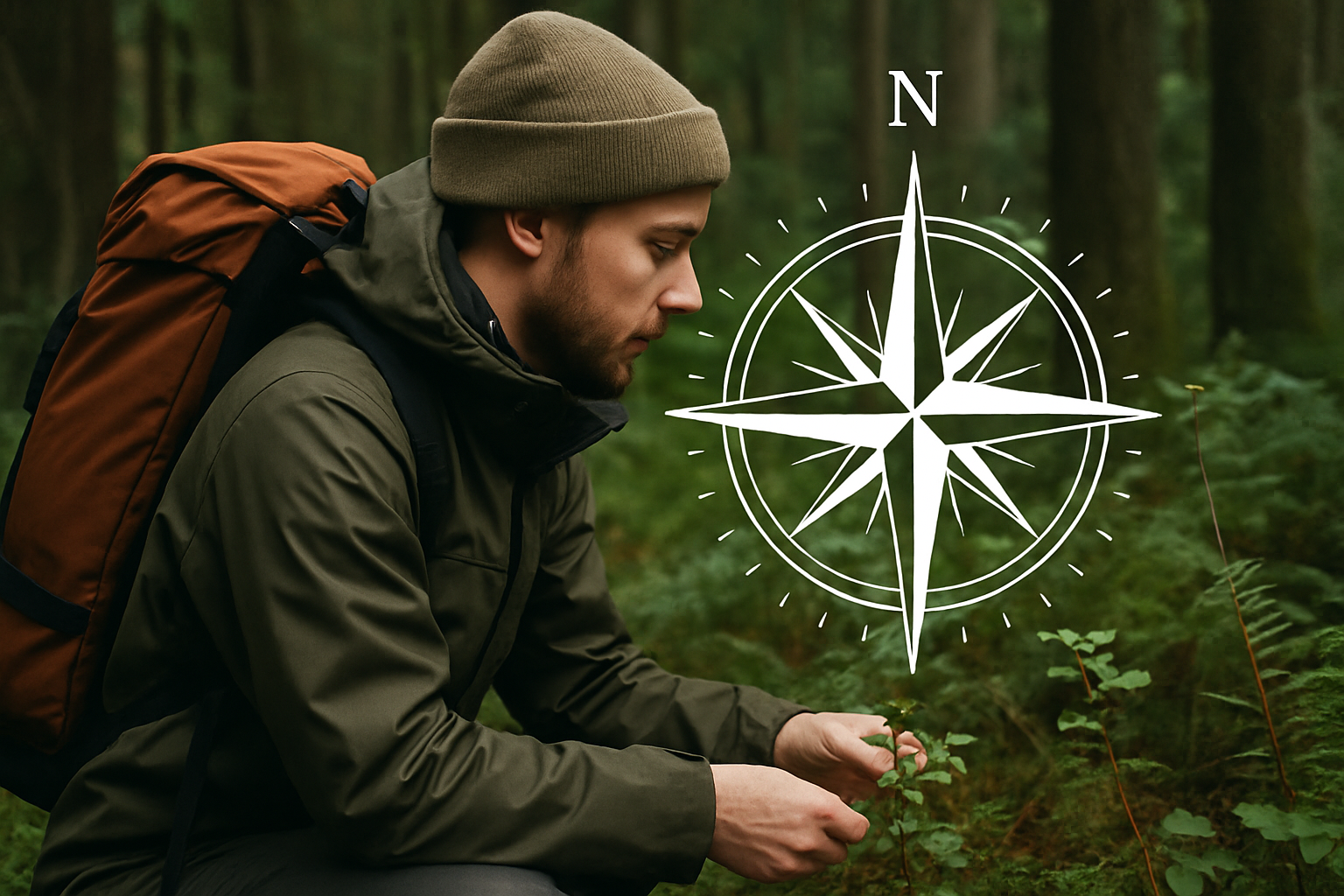
Moss often grows thicker and more abundantly on the side of trees and rocks that receives less sunlight. In the Northern Hemisphere, this tends to be the north side, while in the Southern Hemisphere, it’s often the south side. However, local conditions such as shade and moisture can affect moss growth, so use this indicator in conjunction with others.
Tree Growth and Branch Patterns
- Southern Hemisphere: In the Northern Hemisphere, tree branches usually grow fuller on the southern side due to more sun exposure. Conversely, in the Southern Hemisphere, the northern side gets more sun.
- Tree Bark: Bark tends to be thicker on the side facing prevailing winds or colder temperatures, often the north side in the Northern Hemisphere.
Flowering and Plant Orientation
Some plants and flowers orient themselves toward the sun. For example, sunflowers famously track the sun’s movement during the day, facing east in the morning and west in the afternoon. Observing the angle and orientation of plants can provide subtle hints about cardinal directions.
Reading Animal Behavior for Navigation
Animals have evolved to sense environmental changes and orient themselves efficiently within their habitats. Observing their behavior can provide valuable information.
Bird Flight Patterns
Many migratory birds fly in specific directions depending on the season. For example, in the fall, birds in the Northern Hemisphere tend to head south, while in spring, they move north. Additionally, birds often fly toward water sources or roosting areas at dawn and dusk, which may help you orient yourself relative to nearby rivers or lakes.
Ant Trails and Insect Movement
Ants usually establish trails between food sources and their nests, which are often located in sheltered, dry areas. Observing the direction of ant traffic can help you identify landmarks or water sources. Some species also build their nests on the sunny side of trees or rocks, which can hint at direction.
Animal Tracks and Signs
Tracks, scat, and feeding signs can indicate the presence of water or shelter nearby. Many animals frequent water holes daily, especially at dawn and dusk. Following these signs cautiously can lead you to essential resources.
Natural Environmental Cues for Orientation
Beyond plants and animals, other natural features offer clues for navigation.
The Sun and Shadows
The sun rises in the east and sets in the west, providing a reliable directional reference. You can use a simple shadow stick method:
- Place a stick vertically in the ground.
- Mark the tip of the shadow with a small rock or stick—this marks west.
- Wait 15–30 minutes and mark the tip of the new shadow—this marks east.
- Draw a line between the two marks to establish an approximate east-west line; north will be perpendicular to this line.
Stars and Night Navigation
At night, the North Star (Polaris) in the Northern Hemisphere is a fixed point almost directly above the North Pole. To find it, locate the Big Dipper constellation and follow the line formed by the two stars at the end of its “bowl” to Polaris. In the Southern Hemisphere, the Southern Cross constellation can help determine south.
Wind and Weather Patterns
Prevailing wind directions can vary regionally but tend to be consistent over time. Understanding typical wind patterns can help orient yourself and anticipate weather changes. For example, in many temperate regions, westerly winds prevail, blowing from west to east.
Combining Multiple Indicators for Accuracy
Relying on a single natural cue can be misleading due to local variations. The most effective natural navigators use a combination of indicators to cross-verify direction and location.
- Observe moss and tree growth patterns alongside animal behavior to confirm directions.
- Use the sun’s position by day and stars by night for consistent reference points.
- Pay attention to landmarks such as mountain ridges, river bends, and vegetation changes.
By integrating these observations, you build a mental map of the landscape that improves with practice and experience.
The Benefits of Learning Natural Navigation
Beyond practical navigation, mastering natural cues offers several advantages for outdoor enthusiasts:
- Self-reliance: Reduces dependence on technology, which can fail due to battery loss or signal issues.
- Safety: Enhances your ability to stay oriented in unfamiliar terrain, reducing the risk of getting lost.
- Connection to Nature: Encourages mindfulness and appreciation of natural rhythms and ecosystems.
- Mental Wellness: Fosters calmness and confidence, which are crucial for decision-making in the wilderness.
Practical Tips to Get Started
- Start Small: Practice identifying moss patterns, tree bark, and common bird calls in familiar environments.
- Keep a Nature Journal: Document observations, sketches, and notes about local flora and fauna.
- Combine with Traditional Tools: Use a compass or map to validate your natural navigation skills initially.
- Learn from Local Knowledge: Indigenous and local communities often possess invaluable natural navigation knowledge tailored to their regions.
- Practice Regularly: The more time you spend observing nature, the more intuitive navigation becomes.
Key Takeaways
- Natural navigation uses plants, animals, and environmental cues to determine direction without electronics.
- Moss growth, tree branches, bird flight, and insect trails are practical indicators of cardinal directions.
- The sun, stars, wind, and weather patterns provide reliable orientation tools day and night.
- Cross-referencing multiple natural signs increases navigation accuracy and safety.
- Developing natural navigation skills fosters self-reliance, safety, and a deeper connection with the outdoors.