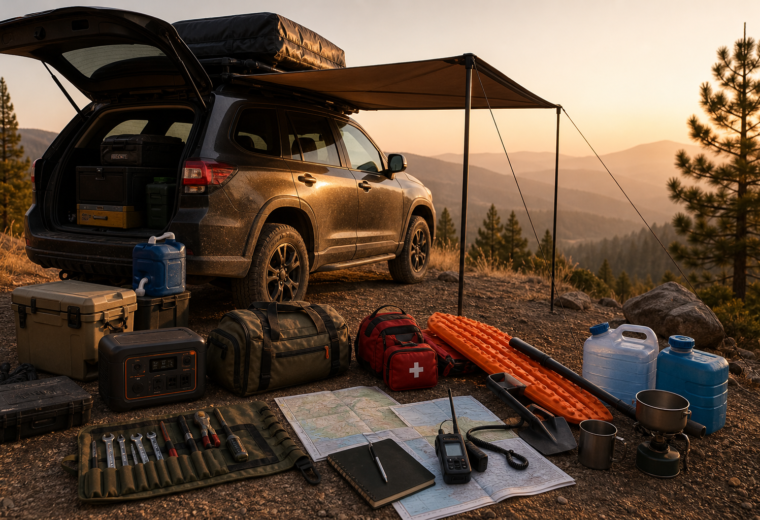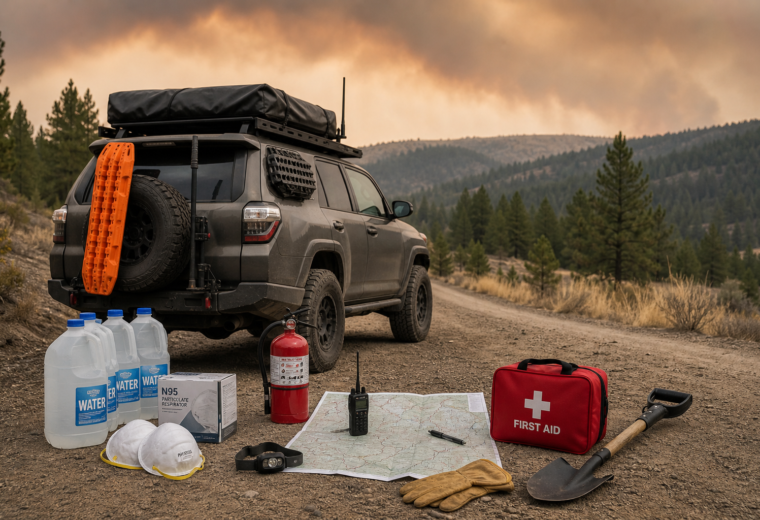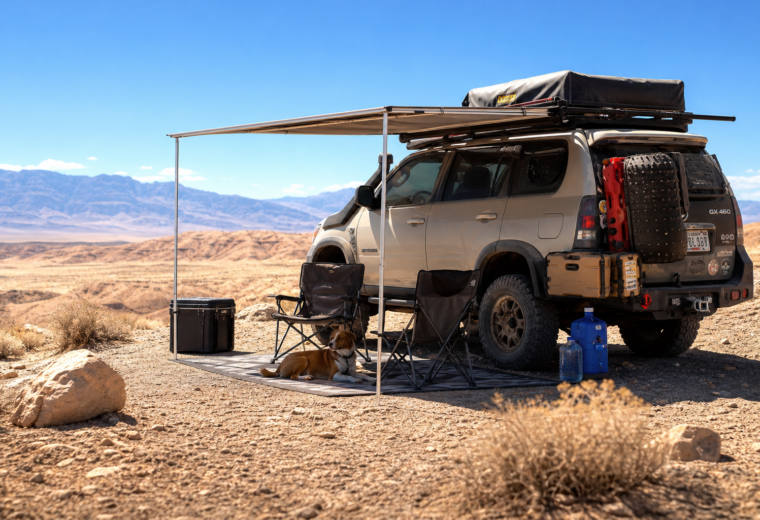
When you travel far from pavement in summer, a “small” breakdown can become a real problem faster than most people expect. Heat, dust, long distances, soft shoulders, and limited shade all work against you. A tire failure that would be annoying in town can become a safety issue on a remote forest road, desert track, or high-country trail where help may be hours away. That is why remote recovery gear is not about being overbuilt for the sake of it; it is about buying time, restoring mobility, and keeping a bad day from turning into an emergency.
This guide focuses on the summer recovery kit worth keeping in your vehicle if you overland, camp off-grid, or regularly drive beyond cell coverage. The goal is simple: handle the most likely failures yourself, protect your vehicle, and get moving safely without relying on luck.
Why summer breakdowns are a different problem
Summer changes the recovery equation. Tires run hotter. Drivers and passengers dehydrate faster. Loose dirt gets dustier and softer. Sand can turn to deep, powdery trap. And a breakdown in hot weather is more than an inconvenience; it can also become a medical concern if you are waiting in direct sun with limited water or no shade.
Because of that, a remote travel kit should solve four jobs:
- Repair common tire and fluid issues
- Recover the vehicle from soft terrain
- Communicate your location or call for help when needed
- Protect people from heat, traffic, and secondary hazards
The best kits are not the biggest ones. They are the kits you know how to use, can reach quickly, and can trust in bad conditions.
Start with tire repair, because tires are the most common failure
For remote travel, tire problems are the first thing to prepare for. Sharp rock, hidden roots, screws, low pressure, and heat all make punctures more likely. A good tire kit lets you repair minor punctures on the spot, reinflate the tire, and keep going without waiting on a tow.
Bring a quality plug kit and know its limits
A roadside plug kit is one of the most useful tools in the vehicle. Look for a kit with sturdy insertion tools, multiple plugs, and enough pieces to handle more than one repair. For a quick field repair, tire plugs can be an excellent temporary solution for tread punctures. They are not the answer for every damage type, though. Sidewall damage, large cuts, and serious bead damage usually mean the tire is done.
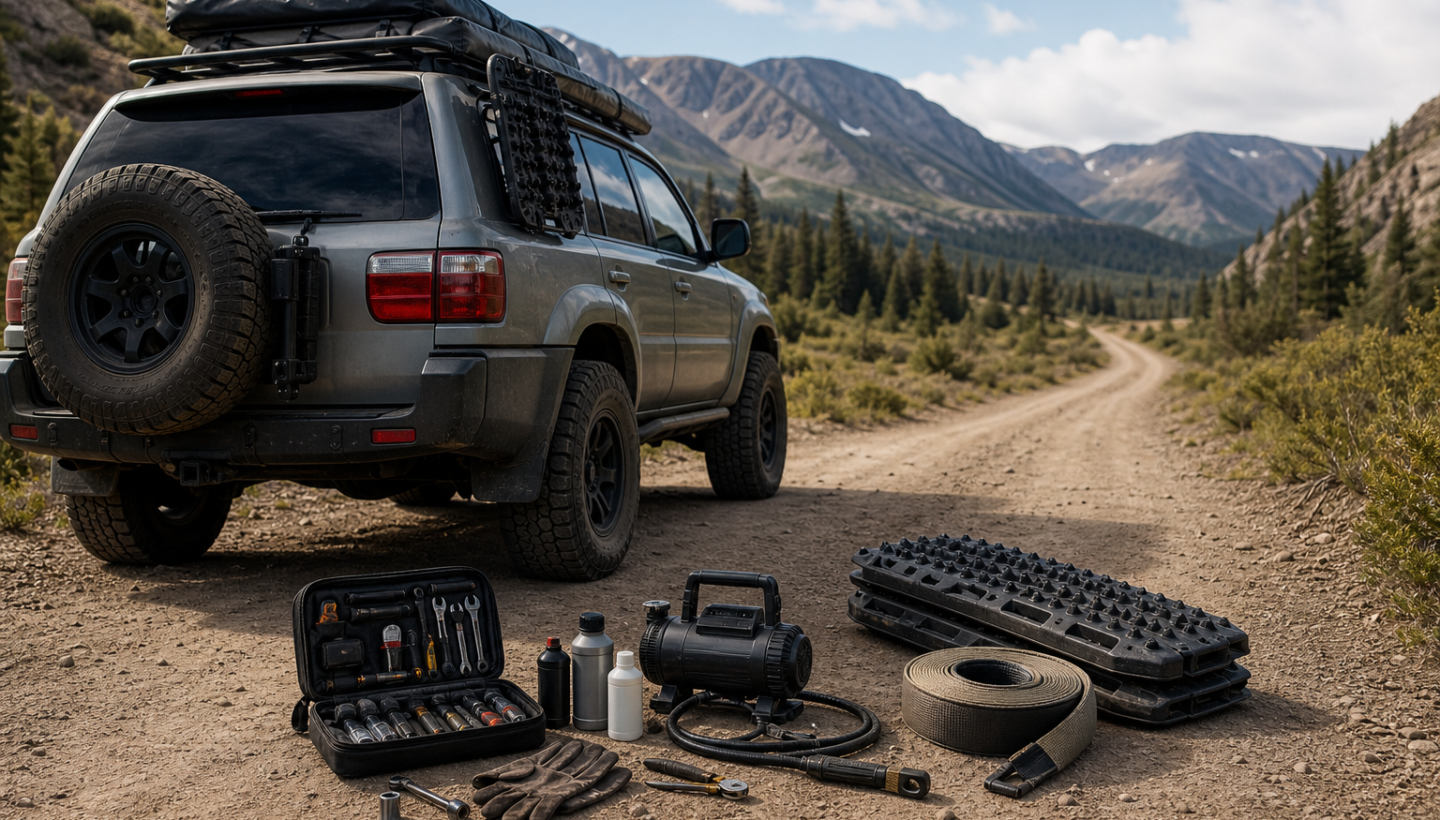
If you travel remotely, it is smart to carry a proper repair kit with a rasp, insertion tool, plugs, and a small knife or blade dedicated to the kit. Keep it together so you are not digging through loose pieces in the dirt.
Pack a portable air compressor
A compressor is just as important as the plug kit. After a repair, you need to restore pressure. Even if you never puncture a tire, airing down for sand or rough washboard is common in remote travel, which means you also need a way to reinflate before returning to highway speed.
Choose a compressor that can run long enough to top up larger tires without overheating immediately. A good compressor should have:
- Enough duty cycle for your tire size
- Solid clamps or a fused power connection
- A gauge you can read in bright sunlight
- An air hose long enough to reach all four tires comfortably
Do not wait until you are stranded to learn that your compressor cannot handle your setup. Test it at home and time how long it takes to air up a tire from trail pressure to road pressure.
Traction boards are not just for sand
Traction boards earn their place in the vehicle because they work in more than one scenario. In summer, they are especially helpful in sand, slick clay, loose gravel, and muddy trail exits after a brief storm. They can give a tire the bite it needs to climb out of a rut or regain traction after a spin.
Use boards with a realistic expectation: they are recovery aids, not magic. They work best when paired with correct tire pressure, a clear path, and controlled throttle. If you bury the vehicle deeper by spinning, the boards become much less useful.
Carry them where you can access them without unpacking half the vehicle. If they are mounted on a roof rack, make sure you have a safe way to get them down. In the heat, the last thing you want is an awkward climb for a tool you may need quickly.
Recovery straps and soft shackles belong in every remote kit
A proper recovery strap is essential, but it should be the right kind. Recovery straps are designed for vehicle extraction; tow straps are not the same thing. You want gear rated for dynamic recovery and suited to the weight of your vehicle. Pair the strap with soft shackles or appropriately rated recovery points.
Keep in mind that recovery hardware is only as safe as the attachment points on the vehicle. Never improvise with hitch balls, random bolts, or structural components not designed for recovery loads. Know where your recovery points are before you need them, and make sure they are accessible when the vehicle is loaded.
If you travel with companions, talk through a recovery plan before the trip. Many injuries happen not because people lack gear, but because they rush a pull, stand in the wrong place, or use the wrong attachment point.
Field rule: if the recovery setup looks uncertain, stop and reassess. A slow, safe recovery is better than a fast, dangerous one.
Carry essential fluids and the means to use them
Summer heat makes fluid issues more likely to show up quickly. Remote travel gear should include basic consumables that can solve common problems or buy enough time to reach help.
- Engine oil in the correct grade for your vehicle
- Coolant or the exact premix recommended by the manufacturer
- Brake fluid if your platform is known to consume it or if you are traveling far from parts stores
- Power steering fluid if applicable to your vehicle
- Windshield washer fluid for dust, bugs, and visibility after trail days
Also keep a funnel, shop towels, nitrile gloves, and a small drain pan or catch container. These items are boring until the day you need them. Then they save time, reduce mess, and make it more likely you will do the repair correctly.
If your vehicle has known weak points, build around them. Older rigs may need belts, hoses, clamps, or a spare fuel pump relay. Newer vehicles may benefit more from an OBD-II scanner, fuses, and a compact jump starter. Match the kit to the machine, not to a generic checklist.
Do not forget basic tools and diagnostics
The recovery gear gets the most attention, but simple tools often solve the actual problem. A remote kit should include enough hand tools to remove a wheel, inspect a brake or suspension issue, reconnect a loose battery terminal, or verify a fault code.
At minimum, consider these items:
- Jack and jack base suitable for soft ground
- Lug wrench or breaker bar that fits your lugs properly
- Torque wrench for reinstalling wheels
- Socket set, pliers, adjustable wrench, and screwdrivers
- Knife or multitool
- Electrical tape, zip ties, and a few hose clamps
- Spare fuses and a basic OBD-II scanner
A jack base matters more than many travelers think. Sand, mud, and hot asphalt can make a jack unstable. A wide, sturdy base reduces the chance of the jack sinking or tipping. In remote areas, stable lifting is a safety issue, not a convenience item.
Build for self-rescue, not just for repair
Self-rescue means planning beyond the repair itself. If you can fix the tire but cannot communicate your position, you still need a plan. If you can free the vehicle but are low on water, you still need a plan. If the issue is not mechanical at all, you still need a way to keep people safe until help arrives.
That is why a remote summer kit should also include:
- Water beyond your normal drinking supply
- Sun protection such as hats, sunscreen, and shade cloth
- First aid supplies with heat illness items in mind
- Offline maps or navigation backup
- Communication backup like a satellite messenger or emergency beacon when traveling truly remote
Even a well-stocked vehicle cannot help if you do not know where you are. Before heading out, save maps offline, tell someone your route, and set a check-in time. That step costs nothing and can shorten response time if you do need help.
How to organize the gear so it actually gets used
A recovery kit that is buried under camp gear is not a good recovery kit. Keep the most likely-use items in a dedicated bin, bag, or drawer system with clear separation:
- Immediate access: gloves, flashlight, compressor, tire plug kit, recovery straps, soft shackles
- Medium access: jack, tools, fluids, fuses, scanner, wheel chocks
- Backup layer: spare parts, extra water, first aid, communication gear
Labeling helps, especially if multiple people travel in the vehicle. The goal is not perfection. The goal is to find the right tool quickly when conditions are bad and patience is low.
It also helps to practice once at home. Air down a tire, plug a deliberate test repair if you are comfortable doing so on a training tire, connect the compressor, use the jack, and stow everything again. A kit you have used once is a kit you are far more likely to trust in the field.
Key takeaways
- Tires are the most common remote failure, so a quality plug kit and compressor should be top priority.
- Traction boards and recovery straps handle soft terrain and extraction, but they work best with proper technique and safe anchor points.
- Summer adds heat risk, so water, shade, and first aid matter as much as mechanical tools.
- Carry the fluids and hand tools that match your specific vehicle, not just a generic emergency kit.
- Practice before the trip so your gear is familiar when conditions are not.
Remote travel rewards preparation. The right recovery kit will not prevent every breakdown, but it can turn a disabling problem into a manageable delay. That is the real value of field-tested gear: fewer guesses, fewer mistakes, and a better chance of getting home safely when the trail gets hard.
Related Resources
- NHTSA Tire Safety — A reliable source for tire maintenance, pressure, and safety basics that matter before and after trail travel.
- Ready.gov: Car and Roadside Emergencies — Practical guidance for building a vehicle emergency kit and preparing for breakdowns.
- American Red Cross First Aid Resources — Useful training and reference material for handling injuries and heat-related issues in the field.
- AAA: How to Change a Flat Tire — A straightforward walkthrough that reinforces the basics of roadside tire changes and safety.
- FEMA Disaster Supplies Kit — A solid checklist for building out emergency supplies beyond just recovery tools.