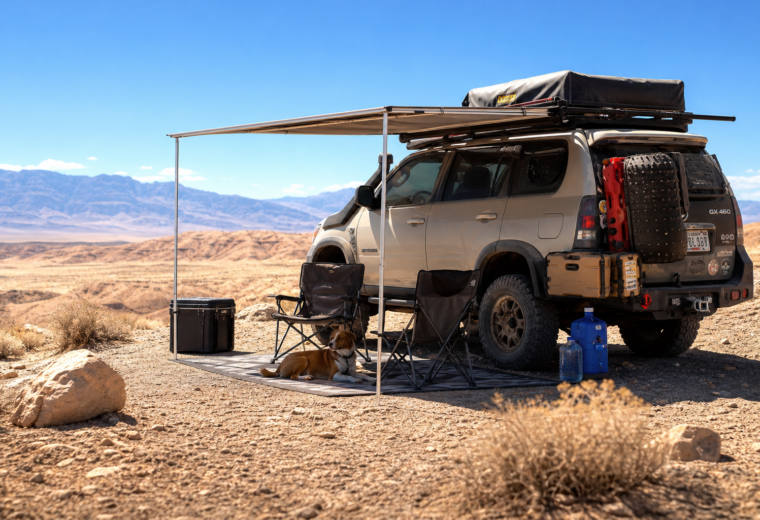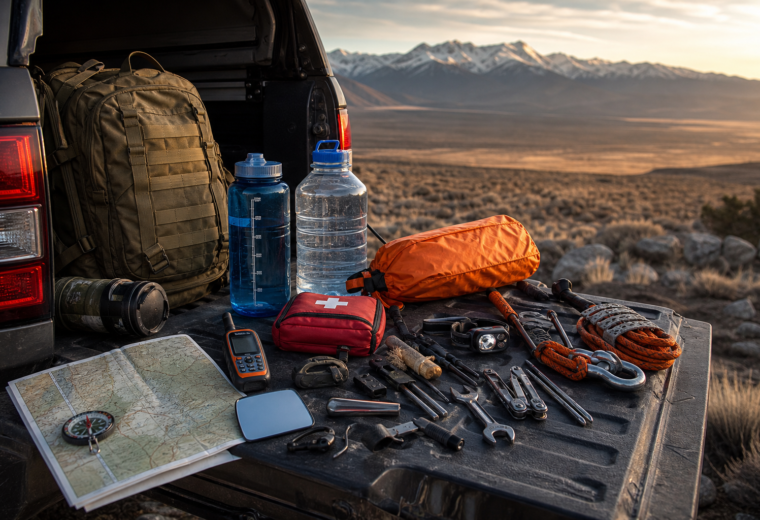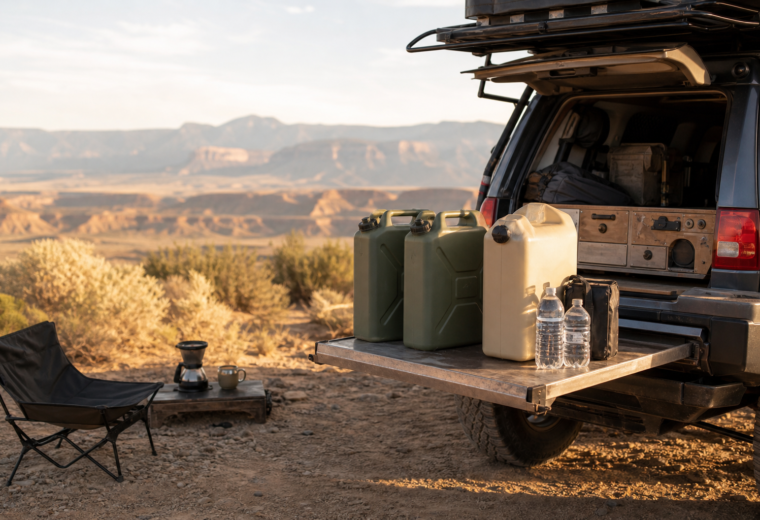
Wildfire season changes the rules for remote travel. A two-track road that felt wide open in spring can become a trap in August if smoke rolls in, a wind shift pushes a fire front, or a single downed tree blocks your only way out. For overlanders, vanlifers, backcountry campers, and anyone driving beyond reliable cell service, wildfire prep is not about panic. It is about prevention, situational awareness, and leaving yourself more than one way to get clear.
The right mindset is simple: do not drive into remote country assuming you can figure it out later. Check conditions before you roll, pack for smoke and breakdowns, know the fire rules, and build your route around exits instead of scenery alone. Wildfire season travel can still be safe and rewarding, but only if you treat fire risk as part of the trip plan from the beginning.
Start With Fire Conditions, Not the Weather Forecast Alone
Weather matters, but wildfire risk is bigger than temperature and sunshine. Wind speed, humidity, fuel dryness, lightning, active incidents, road closures, and public land restrictions all need to shape your route.
Before leaving pavement, check multiple sources:
- Active wildfire maps: Look for current incidents near your route, not just your destination.
- Public land agency alerts: Forest Service, BLM, state parks, tribal lands, and county emergency pages may all have different restrictions.
- Red Flag Warnings: These indicate critical fire weather, often driven by wind, low humidity, and dry fuels.
- Road closure notices: Fire operations, smoke, landslides, and evacuation traffic can close remote roads fast.
- Local ranger stations or dispatch offices: A five-minute phone call can reveal conditions that apps have not caught up with yet.
Do not rely on a single app screenshot from the night before. Fire conditions change by the hour. Make checking conditions part of your morning routine, especially if you are traveling through timber, grassland, brush country, or canyon terrain with limited escape routes.
Know the Restrictions Before You Light Anything
Most wildfire-season mistakes happen at camp: open flames, poorly managed stoves, dragging chains, hot exhaust over dry grass, cigarettes, fireworks, or careless vehicle recovery work. Restrictions exist because small sparks become large incidents when the fuel bed is ready.
Common restrictions may include:
- No campfires, charcoal grills, or wood stoves.
- Propane stoves allowed only in cleared areas with an on/off valve.
- No target shooting or tracer rounds.
- No chainsaw use during certain hours.
- No internal combustion equipment off designated roads.
- Stage II or complete fire closures, meaning no camping or entry in specific areas.
Carry a small notebook or save offline screenshots of the current restrictions for the jurisdictions you are crossing. Boundaries are not always obvious in the field. You may pass from national forest to BLM to state land in a single afternoon, and the rules can change with each line on the map.
Plan Evacuation Routes Before You Need Them
A remote campsite with one narrow road in and out may be beautiful, but during fire season it deserves extra scrutiny. Wind-driven fires can move faster than you can safely break camp, especially in grass and brush. Smoke can make navigation difficult. Other vehicles may be leaving at the same time. A locked gate, washout, fallen tree, or bridge closure can turn a shortcut into a dead end.
Before you commit to a camp or backroad route, identify at least two exit options. Three is better. Study them on both digital and paper maps. Pay attention to terrain, not just distance. A road that looks like an escape route may climb through heavy timber, cross a steep ridge, or dead-end at private land.
When choosing a campsite during fire season, favor:
- Areas with multiple roads leading toward pavement.
- Open terrain with good visibility.
- Sites away from heavy deadfall, dense brush, and narrow drainages.
- Locations where you can turn your vehicle around quickly.
- Camp layouts that allow immediate departure without repacking everything perfectly.
Park facing out. Keep your driver’s seat accessible. Avoid leveling or unpacking in a way that makes departure slow. In high-risk conditions, your camp should be comfortable but not complicated.
Smoke and Air Quality Tools Belong in the Kit
Smoke is not just an inconvenience. It can reduce visibility, irritate lungs, trigger asthma, hide nearby fire activity, and make driving more dangerous. In valleys and basins, smoke can settle overnight and become much worse by morning.
Pack and use basic smoke awareness tools:
- Air quality apps or websites: Check AQI before entering an area and again each morning.
- Offline maps: Smoke can disorient you, and cell service often disappears when you need it.
- Vehicle cabin air filters: Replace old filters before the trip and consider carrying a spare.
- Portable air monitor: Useful for travelers with respiratory issues or families with children.
- Eye drops and saline rinse: Small comfort items that matter after a smoky day.
If the smoke is thick enough to sting your eyes, obscure nearby ridgelines, or make breathing uncomfortable at rest, reassess the trip. Do not wait until you feel sick. Smoke exposure adds up, and remote country is not the place to discover that your lungs are done for the day.
Vehicle Readiness: Your Escape Tool Comes First
During wildfire season, your vehicle is not just transportation. It is your shelter, evacuation system, communications platform, and supply cache. A marginal vehicle becomes a serious liability when roads are smoky, crowded, or actively closing.
Before heading into remote country, inspect the basics:
- Tires: Good tread, no sidewall damage, correct pressure, and a full-size spare if possible.
- Brakes: Long descents on evacuation routes can punish worn brakes.
- Cooling system: Hot weather, slow climbs, and loaded rigs stress radiators and hoses.
- Battery and charging: Heat kills weak batteries; test yours before the trip.
- Fluids: Engine oil, coolant, brake fluid, transmission fluid, and windshield washer fluid.
- Air intake and filters: Dust and smoke can clog filters faster than normal.
- Lights: Headlights, brake lights, hazard lights, and auxiliary lights should all work.
Also think about fire prevention from the vehicle itself. Do not park over dry grass, especially after highway driving. Hot exhaust components can ignite fine fuels. Check under the rig after driving through tall grass or brush. Remove packed seed heads, leaves, and debris from skid plates, exhaust areas, and engine compartments.
Emergency Communications: Assume Cell Service Will Fail
Cell phones are useful until they are not. Remote fire country often has poor coverage, and networks can overload during evacuations. Carry at least one backup communication method that does not depend on cell towers.
Strong options include:
- Satellite messenger: Allows SOS, location sharing, and short text updates from remote areas.
- GMRS radio: Good for vehicle-to-vehicle communication within a group, especially on backroads.
- HAM radio: Valuable if licensed and practiced, particularly where repeaters are available.
- NOAA weather radio: Useful for alerts, fire weather, and emergency broadcasts.
Gear is only half the system. Set communication plans before departure. Tell someone your route, camp options, expected check-in times, vehicle description, license plate, and when to call for help if you miss contact. If traveling with multiple rigs, agree on radio channels and backup meeting points before the convoy gets separated.
Masks and Respiratory Protection
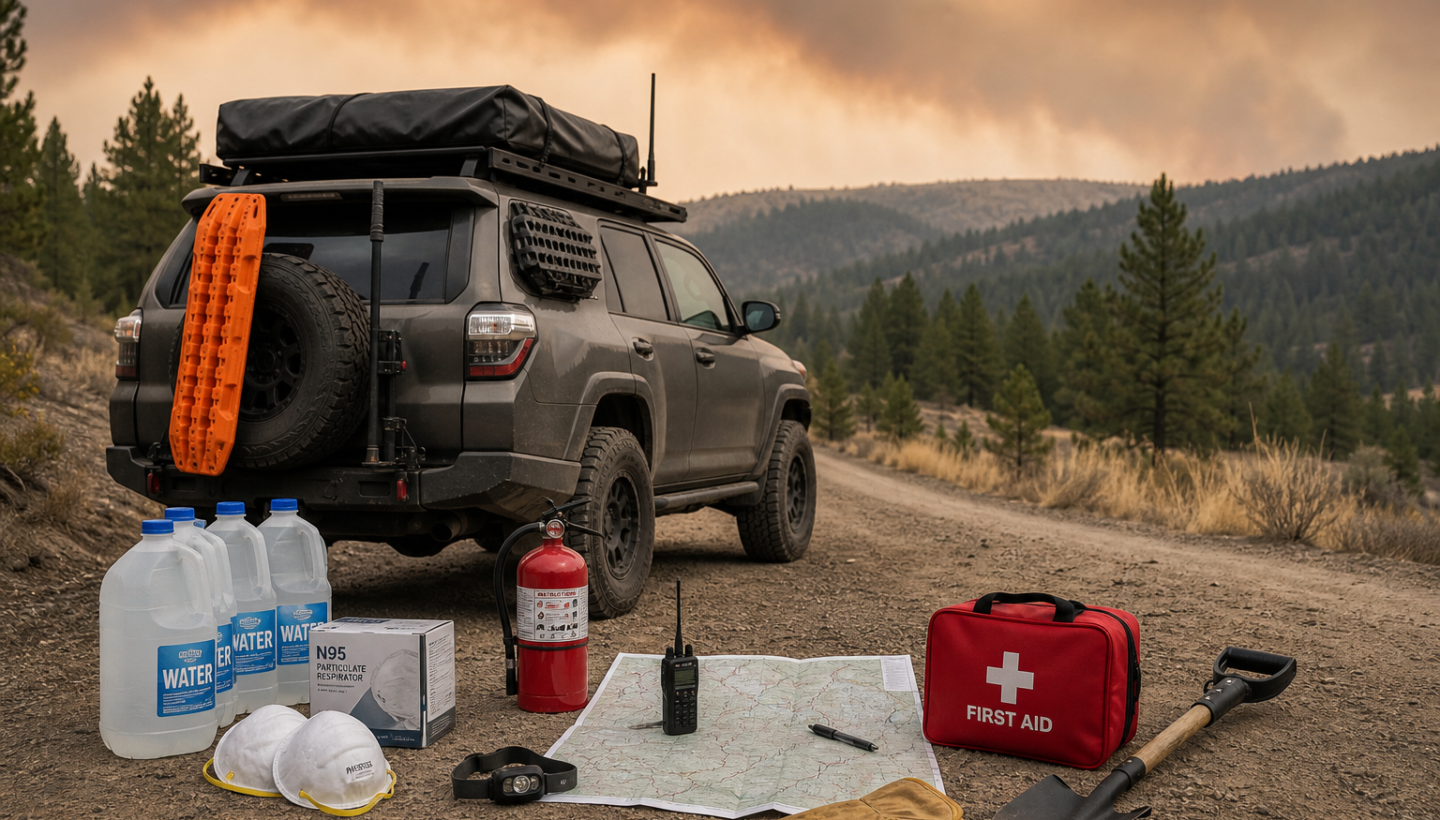
A bandana is not respiratory protection. It may catch large ash particles, but it will not reliably filter the fine particulate matter that makes wildfire smoke dangerous. For smoke, pack properly fitted N95, KN95, or P100 masks from reputable manufacturers.
For wildfire season travel, carry more masks than you think you need. Masks get dirty, wet, crushed, and uncomfortable after extended use. Store them in a hard case or sealed bag so they are usable when conditions turn bad.
Consider packing:
- N95 or P100 masks for each traveler.
- Spare masks for unexpected delays or guests.
- Eye protection for ash and windblown debris.
- Medications for asthma, allergies, or respiratory conditions.
- A clean-air plan for children, older adults, and vulnerable passengers.
If anyone in your group has respiratory sensitivity, shorten your risk tolerance. The right move may be to reroute early rather than test how bad the smoke might get overnight.
Water and Fire Suppression Basics
You are not packing to fight a wildfire. That is not your job, and trying to do it can get you killed. Your goal is to prevent starts, control very small camp-related incidents, and leave safely. Think “spark control,” not “firefighting.”
Still, every remote vehicle should carry basic fire suppression tools:
- ABC fire extinguisher: At least one, mounted where you can reach it quickly.
- Additional extinguisher: A second unit near the kitchen or rear storage area is smart.
- Water storage: Extra water beyond drinking needs for cooling, cleanup, and emergency use.
- Collapsible bucket: Useful for dousing a stove area or soaking ground around camp tasks.
- Shovel: Essential for clearing mineral soil and managing small hazards.
- Work gloves: For handling hot gear, moving debris, or clearing brush.
Know how to use your extinguisher before you need it. Remember PASS: pull the pin, aim at the base, squeeze the handle, and sweep side to side. Check the pressure gauge before each trip and replace expired or damaged units.
Camp Cooking During Fire Bans
Fire bans do not mean you cannot eat well. They mean you need a cooking system that is legal, controlled, and easy to shut down instantly. In many areas, propane or isobutane stoves with an on/off valve are still allowed when wood and charcoal are banned, but rules vary. Confirm before cooking.
Good wildfire-season cooking practices include:
- Cook on bare dirt, gravel, rock, or a fireproof table surface.
- Clear dry grass, needles, and leaves around the kitchen area.
- Keep water and an extinguisher within arm’s reach.
- Never leave a stove unattended, even for a minute.
- Avoid cooking in strong wind if flames cannot be controlled.
- Let stoves cool before packing them near fabric, paper, or fuel.
Pack no-cook meals as a backup. If restrictions tighten, wind increases, or smoke forces a fast departure, you should still be able to eat without unpacking a full kitchen. Tortillas, nut butter, tuna packets, protein bars, dried fruit, jerky, ready-to-eat meals, and instant coffee packets can keep the day moving.
Go/No-Go Decision Points
The hardest part of wildfire-season travel is often turning around before things are obviously bad. Build decision points into the plan so you are not making choices under stress.
Consider it a no-go or reroute if:
- A Red Flag Warning is active for your destination or exit route.
- There is an active fire near your route with uncertain growth potential.
- Your only exit road passes through dense timber, steep canyon terrain, or a closure-prone corridor.
- Smoke is already reducing visibility before you enter remote country.
- Public agencies have issued evacuation warnings nearby.
- Your vehicle has unresolved mechanical issues.
- You cannot confirm current restrictions or road status.
- You are traveling with vulnerable passengers and air quality is poor.
Also set in-camp triggers. For example: if wind shifts toward camp, if ash begins falling, if smoke thickens, if you receive an evacuation alert, or if you hear aircraft and see columns building nearby, you leave. Do not wait for someone to knock on your van door. In remote country, you may be your own first warning system.
Build Situational Awareness Into the Day
Wildfire awareness is not a one-time check at home. It is a habit. Look at the sky. Smell the air. Watch the wind. Notice traffic patterns. If every local truck is heading out while you are heading in, pay attention.
At camp, keep your map open and your gear organized. Charge devices while you can. Download maps before you lose signal. Keep shoes, keys, headlamp, glasses, and critical medication in the same place every night. If you wake up to smoke or an alert, you should not be searching through bins in the dark.
Field rule: The best wildfire escape plan is the one you start early, with a running vehicle, clear route, full tank, and calm passengers.
Short Key Takeaways
- Check fire conditions daily. Use multiple sources and verify restrictions for each land agency you cross.
- Never depend on one exit. Plan multiple evacuation routes and park so you can leave fast.
- Smoke is a real hazard. Carry proper masks, monitor air quality, and reroute before exposure becomes serious.
- Your vehicle is your lifeline. Maintain it, fuel it, and keep it ready for immediate departure.
- Prevent sparks. Avoid open flames, hot exhaust over grass, careless cooking, and anything that can ignite dry fuels.
Wildfire Season Packing Checklist
Navigation and Information
- Offline maps on phone or tablet.
- Paper maps for the region.
- Compass or backup GPS.
- Saved fire restriction notices.
- Active incident and road closure resources bookmarked.
- NOAA weather radio or alert-capable device.
Communications
- Satellite messenger or personal locator beacon.
- GMRS or HAM radio, if appropriate.
- Spare charging cables and power banks.
- Vehicle charger and solar backup if used.
- Written emergency contact and route plan.
Vehicle and Recovery
- Full-size spare tire and repair kit.
- Air compressor and tire gauge.
- Basic tools and fluids.
- Jumper pack or battery booster.
- Recovery boards, strap, and shackles where appropriate.
- Headlamp and work gloves.
- Extra fuel where legal and safely stored.
Fire Prevention and Suppression
- ABC fire extinguisher mounted within reach.
- Second extinguisher near kitchen or rear storage.
- Shovel.
- Collapsible bucket.
- Extra water for non-drinking emergency use.
- Heat-resistant gloves.
Smoke and Personal Protection
- N95, KN95, or P100 masks for every traveler.
- Spare masks in sealed storage.
- Eye protection.
- Cabin air filter checked or replaced.
- Personal medications and inhalers.
- Saline rinse or eye drops.
Camp and Cooking
- Legal stove with an on/off valve.
- Stable cooking surface.
- No-cook backup meals.
- Water close to cooking area.
- Metal container or safe storage for hot items.
- Trash bags to pack out all waste.
Fast-Exit Essentials
- Keys stored in a consistent location.
- Shoes and headlamp accessible at night.
- Go-bag with documents, medication, water, snacks, and layers.
- Pet leash, carrier, food, and water if traveling with animals.
- Vehicle parked facing out.
- Camp packed so critical gear can be loaded quickly.
Final Field Note
Wildfire season does not require fear, but it does demand respect. The safest travelers are not the ones with the most expensive rigs or the biggest gear wall. They are the ones who check conditions, follow restrictions, keep their vehicle ready, and leave early when the signs point the wrong direction.
Remote country will still be there after the wind drops, the smoke clears, and the closures lift. Good judgment keeps you alive to come back.
Related Resources
- InciWeb Wildfire Information — Official incident information for many large wildfires across the United States, including maps, updates, and closure details.
- AirNow — EPA-supported air quality data and smoke information useful for checking AQI before and during travel.
- National Weather Service Fire Weather — Fire weather forecasts, Red Flag Warnings, and critical weather information for trip planning.
- Ready.gov Wildfires — Practical wildfire preparedness guidance for evacuation planning, alerts, and personal safety.
- National Interagency Fire Center Fire Information — National-level fire activity, outlooks, and situational awareness from federal fire agencies.