
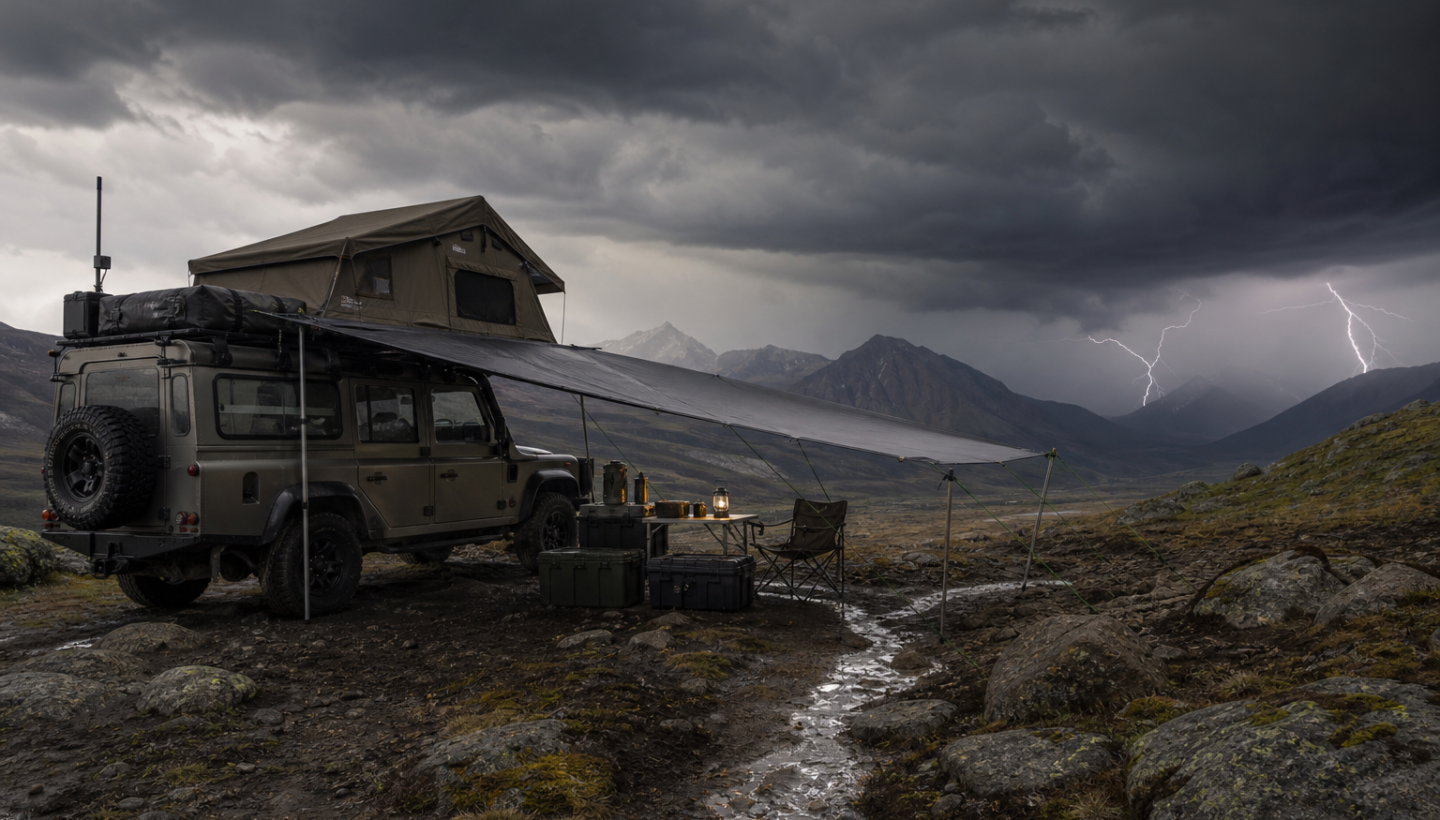
Severe weather does not care how dialed your camp setup looked at sunset. A calm evening can turn into a hard lesson when wind shifts, rain stacks up in the drainage, or lightning starts walking across the ridgeline. For off-grid travelers, vanlifers, overlanders, and remote campers, storm readiness starts before the first gust hits. The best time to make decisions is while you still have daylight, dry hands, and the option to move.
This field guide is built for practical camp setup in exposed, remote, and vehicle-based environments. Use it before you settle in, anytime the forecast turns ugly, or when the sky starts giving you warnings that your app missed.
Start With the Forecast, Then Read the Terrain
Weather apps are useful, but they are not a substitute for local observation. Mountain valleys, desert washes, coastal plains, and forested plateaus all create their own microclimates. A storm that looks minor on radar can become serious when funneled through a canyon or pushed over a pass.
Before choosing camp, check multiple sources if possible: a weather app, NOAA or national weather service alerts, satellite view, and local ranger or public land updates. Look specifically for wind advisories, thunderstorm warnings, flash flood watches, and rapid temperature drops.
Then look around. Your campsite should answer three questions:
- Where will water go? Identify washes, gullies, low spots, hard-packed runoff channels, and areas with debris lines.
- Where will wind hit first? Note ridgelines, open plains, canyon mouths, and gaps between trees or rocks.
- Where would you move if conditions worsen? Always know your exit route before you level the vehicle or unpack the tent.
Choose a Safer Campsite Before Weather Arrives
A good storm-ready site is not always the prettiest site. The exposed overlook, the flat riverbank, and the tucked-away wash may be comfortable in fair weather, but each can become a liability when conditions change.
Avoid Flood-Prone Terrain
Flash flooding is one of the fastest ways a camp turns dangerous. You do not need rain directly overhead to be at risk. Water can arrive from storms miles upstream, especially in desert country, slot canyons, dry creek beds, and burned areas where soil no longer absorbs runoff well.
Avoid camping in or beside:
- Dry washes, arroyos, creek beds, and seasonal drainage channels
- Low spots at the base of slopes
- Areas with tangled sticks, mud lines, or debris wrapped around shrubs
- Riverbanks with steep cut edges or freshly deposited silt
- Narrow canyons where escape routes are limited
Look for slightly elevated ground with natural drainage away from your shelter. If the site is perfectly flat and surrounded by higher ground, it may become a basin once rain starts.
Watch the Trees
Trees can provide wind protection, but they can also drop limbs. In storm country, learn to spot “widowmakers”: dead branches, split trunks, leaning trees, root heaves, or dead snags near camp. Avoid parking or pitching under old cottonwoods, burned timber, beetle-killed pines, or any tree already stressed by drought or fire.
If you use trees as wind breaks or tarp anchors, choose healthy, flexible trees and keep your sleeping area out from under major limbs.
Use Natural Wind Breaks Carefully
Boulders, berms, hillsides, and dense vegetation can reduce wind load, but avoid setting up directly beneath unstable slopes or loose rock. In desert and mountain terrain, heavy rain can trigger rockfall and mud movement. A good wind break should protect without putting you in the path of falling material or concentrated runoff.
Orient Vehicles and Shelters Against Wind
Wind direction matters. A vehicle, tent, awning, or tarp can either shed wind or catch it like a sail. If high winds are forecast, simplify your footprint and point your strongest side into the weather.
Vehicle-Based Camps
For vans, trucks, campers, and overland rigs, park with the nose or rear toward the prevailing wind when possible. The broadside of a van or rooftop tent presents a large surface area and can rock hard in gusts. If you have a rooftop tent, consider whether it should be deployed at all in high wind. Ground sleeping inside the vehicle may be safer and quieter.
Keep doors on the leeward side when possible so they do not get ripped open by gusts. If you must cook, do it inside a properly ventilated vehicle galley or behind a safe windscreen outside, away from dry grass and loose fabric. Never run combustion heaters or stoves without appropriate ventilation and carbon monoxide awareness.
Tents and Shelters
Pitch the lowest, narrowest end of a tent into the wind. Keep vestibules tight, doors zipped, and guylines deployed before the gusts arrive. If a storm is building, this is not the time for a relaxed pitch. Use every guy-out point your shelter provides.
For tarps, lower the ridgeline, reduce exposed panels, and create steep angles that shed rain. A low A-frame or lean-to is usually stronger than a high, open porch configuration. If wind is shifting, avoid large flat tarp faces that can invert or tear.
Anchor Everything Like the Weather Will Test It
Most camp failures start small: one loose corner, one stake pulled from soft ground, one awning left out too long. Severe weather rewards overbuilding.
Use the Right Stakes and Anchors
Different ground requires different anchors. Thin wire stakes are fine in firm soil but nearly useless in sand, snow, gravel, or saturated ground.
- Firm soil: Use sturdy aluminum or steel stakes driven at an angle away from the shelter.
- Sand: Use sand stakes, deadman anchors, buried stuff sacks, or filled dry bags.
- Snow: Use snow stakes, skis, poles, or buried anchors packed firmly and allowed to set.
- Rocky ground: Use large rocks as anchors, wrap guylines low, and protect cord from sharp edges.
- Mud or saturated soil: Use longer stakes and double up critical points, because holding power drops fast once ground softens.
Build Redundancy Into Critical Lines
Use knots and tensioners you can adjust with cold or wet hands. Add backup knots on slick cord. Where one failure would collapse the shelter, double the anchor or split the load with a second line. Do not tie essential shelter support to lightweight camp furniture, coolers, or loose gear that can shift.
If you have an awning attached to a vehicle, retract it before severe wind hits. Awnings are useful shade tools, not storm structures. Many are damaged because people wait until conditions are already too dangerous to safely put them away.
Manage Rain Runoff Before the Ground Saturates
Rain problems are often setup problems. Water follows gravity, compacted soil, tire ruts, and footpaths. If your camp layout sends water toward your sleeping area, it will eventually find a way in.
Set Camp on Durable, Draining Ground
Choose ground that is slightly crowned or sloped enough to drain, but not so sloped that water sheets under your tent or vehicle mat. Avoid setting tents in depressions, even shallow ones. They may feel comfortable at first and turn into puddles later.
In established sites, look for evidence of previous pooling: dark soil, flattened grass, mud cracks, or rings of debris. If you see those signs, move.
Control Your Footprint
Place ground tarps fully under the tent floor, not sticking out past the edges. Exposed tarp edges catch rain and funnel water under you. Keep gear bins, shoes, and firewood off the direct drainage path. Store essentials in waterproof containers before rain begins, not after the first leak appears.
Avoid digging trenches unless it is a genuine emergency and allowed in that location. Trenching damages campsites and can worsen erosion. Better site selection, proper pitch, and elevated storage solve most runoff issues.
Protect Gear, Food, and Electronics
Storms punish disorganization. When the wind rises, loose gear becomes debris. When rain starts, anything left open becomes wet. When lightning builds, exposed electronics and antennas deserve attention.
Use a Wet-Weather Gear System
Divide your gear into three categories: mission-critical, weather-resistant, and disposable comfort. Mission-critical items include insulation, navigation, communications, first aid, fire-starting tools, and power. These should live in waterproof bags, hard cases, or sealed bins.
- Keep a dry sleep layer sealed until bedtime.
- Store batteries, radios, cameras, and power banks in dry bags or gasketed cases.
- Use cable pass-throughs carefully; every cord entering a vehicle or tent can become a drip line.
- Elevate gear off tent walls, floors, and vehicle door sills where water collects.
- Secure solar panels, camp chairs, tables, antennas, and empty water jugs before wind arrives.
Plan for Power and Communications
If you depend on battery power, charge devices before the storm reaches you. Solar production may drop hard under heavy cloud cover, and high winds may force you to stow panels. Keep at least one light, one communication device, and one navigation tool protected and ready.
Satellite messengers, weather radios, and offline maps are worth their weight when cell service disappears. If you are in a vehicle, know which devices are charging from house power and which are draining your starter battery. A storm is not the time to discover you cannot start the rig.
Reduce Lightning Exposure
There is no completely safe place outside during lightning. Your goal is to reduce exposure and move to a safer location before the storm is overhead. If you can hear thunder, lightning is close enough to be a threat.
Avoid High and Isolated Positions
Do not remain on ridgelines, summits, open flats, shorelines, or near isolated tall trees when lightning is active. Avoid metal fences, exposed antennas, tall poles, and open water. If you are camping on a high point for the view, relocate lower before the storm arrives.
A hard-topped vehicle with doors and windows closed is generally safer than a tent because it can conduct current around occupants, not because of the rubber tires. Avoid touching metal components, roof racks, radios connected to external antennas, or wired accessories during close lightning.
If You Are Caught Away From Shelter
Spread group members apart to reduce the chance of multiple injuries from one strike or ground current. Move away from lone trees and exposed high ground. Do not lie flat. If there is no better option, crouch low with feet close together and minimize contact with the ground until you can move to a safer position.
Field rule: Thunder means action. If you hear it, stop adjusting camp comfort items and start reducing exposure, securing essentials, and preparing to shelter or move.
Use Weather Alerts Without Becoming Dependent on Them
Alerts are powerful, but remote travelers often operate at the edge of coverage. A phone may not receive warnings in a canyon, behind a ridge, or after towers lose power. Build a layered warning system.
- Enable emergency alerts on your phone before leaving service.
- Carry a NOAA weather radio or regional equivalent where available.
- Download offline maps and identify higher ground, paved roads, and alternate exits.
- Check radar when you have signal, but watch cloud movement and wind shifts in real time.
- Set personal trigger points: wind speed, rainfall rate, lightning distance, or rising water level that means you pack up.
Do not wait for an official evacuation message if the terrain is already telling you to leave. In remote areas, you are often your own first responder.
Know When to Pack Up or Relocate
Good judgment is the most important storm tool in camp. There is no shame in leaving a site that no longer looks right. The dangerous decision is staying because setup took effort or because the view is good.
Relocate before dark if any of the following are true:
- You are in a wash, drainage, river bottom, or low basin with rain forecast upstream.
- Wind is increasing and your shelter or awning is already struggling.
- Lightning is approaching and you are on exposed high ground.
- Trees around camp are dropping branches or swaying violently.
- Your exit road crosses a creek bed, clay track, or steep section that may become impassable.
- You feel boxed in with no clear escape route.
When packing under pressure, prioritize people, shelter, communications, keys, medications, warm layers, and water. Everything else is secondary. Keep your vehicle pointed toward the exit when severe weather is likely, and avoid deploying gear that takes too long to break down.
Storm-Ready Camp Checklist
Use this checklist before the weather turns. If you wait until the storm is on top of you, every task becomes harder.
Site Selection
- Camp above drainages, not inside them.
- Avoid dead trees, loose rock, and unstable slopes.
- Identify wind direction and natural protection.
- Confirm at least one reliable exit route.
Shelter and Vehicle
- Orient the strongest side into the wind.
- Retract awnings before gusts arrive.
- Stake and guy out tents fully.
- Lower tarps and reduce sail area.
- Keep doors, hatches, and roof gear secured.
Water and Gear
- Move gear out of runoff paths.
- Seal electronics, insulation, and first aid supplies.
- Charge critical devices early.
- Secure loose camp items.
- Keep rain layers and headlamps accessible.
Lightning and Alerts
- Leave ridgelines, shorelines, and exposed flats.
- Shelter in a hard-topped vehicle when appropriate.
- Avoid contact with external antennas and metal accessories during close strikes.
- Monitor alerts, sky conditions, and thunder distance.
Key Takeaways
- Pick terrain first, comfort second. A safer camp is elevated, draining, protected from wind, and clear of dead trees or flood channels.
- Wind turns fabric into leverage. Retract awnings, lower tarps, use all guylines, and orient shelters to shed gusts.
- Water follows clues. Debris lines, mud stains, gullies, and low basins show you where runoff has gone before.
- Lightning requires early movement. If thunder is audible, reduce exposure and get off high, open, or isolated terrain.
- Leaving is a valid survival decision. Pack up before roads fail, darkness falls, or the storm removes your options.
Related Resources
- National Weather Service Flood Safety — Practical guidance on flash floods, flood watches, and how to respond when water rises quickly.
- National Weather Service Lightning Safety — Official lightning safety recommendations for outdoor situations and storm awareness.
- NOAA Weather Radio — Information on weather radio broadcasts and alert systems useful for remote travel planning.
- Ready.gov Thunderstorms and Lightning — Preparedness steps for severe thunderstorms, lightning, hail, and high wind hazards.