Heat is not just an inconvenience when you live, camp, or travel off-grid. It is an operational risk that affects your body, vehicle, batteries, water supply, food storage, pets, route planning, and decision-making. In remote travel, managing heat is less about comfort and more about keeping your systems stable long enough to avoid cascading failures.
A hot day can become a serious problem quickly when you are far from shore power, pavement, cell service, or reliable resupply. A van that feels tolerable at sunrise can become an oven by noon. A lithium battery compartment can climb past safe operating limits. A refrigerator can run continuously and drain your power reserve. Water consumption can double. The goal is to think ahead, reduce heat gain before it happens, and build habits that keep both people and equipment inside workable limits.
Why Heat Is a Serious Off-Grid Risk
Heat creates pressure across every part of an off-grid system. The human body has to work harder to regulate temperature. Batteries and electronics lose efficiency and may shut down. Refrigeration draws more power. Tires, fluids, seals, and adhesives are stressed. Food spoils faster. Water disappears faster than expected. Pets can become critically overheated before people realize there is a problem.
The danger is often cumulative. One hot afternoon may not break your setup, but three days of high temperatures with warm nights can leave batteries undercharged, water low, sleep poor, and judgment compromised. In the field, fatigue and bad decisions are often the first real failures.
Good heat management starts before the forecast turns red. It means designing your camp, vehicle, and routines so you are not depending on one fan, one cooler, or one late-day supply run to stay safe.
Choose Shade Like It Is Infrastructure
Shade is one of the most valuable resources in hot environments. Treat it the same way you would treat water access or wind protection. A shaded vehicle can remain dramatically cooler than one exposed to direct sun, and reducing solar gain early in the day makes every other cooling method more effective.
Read the Sun Before You Park
Do not choose a campsite based only on how it looks when you arrive. Think about where the sun will be in two, four, and eight hours. Morning shade is useful if you want to sleep in or keep the vehicle cooler after sunrise. Afternoon shade is usually more important in very hot conditions because it protects your rig during the peak heat load.
In the Northern Hemisphere, the sun tracks across the southern sky. Parking with natural shade to the south and west can reduce afternoon heat. In desert terrain, even small landforms, boulders, and washes can cast useful shade at the right time of day, but avoid low areas that could flood during storms.
Use Orientation to Control Heat Gain
Vehicle orientation matters. If you have a van, truck camper, or trailer, consider which side has the most glass, which side contains the refrigerator or battery compartment, and where your doors and awning are located. Park so the largest window area receives the least intense sun when possible.
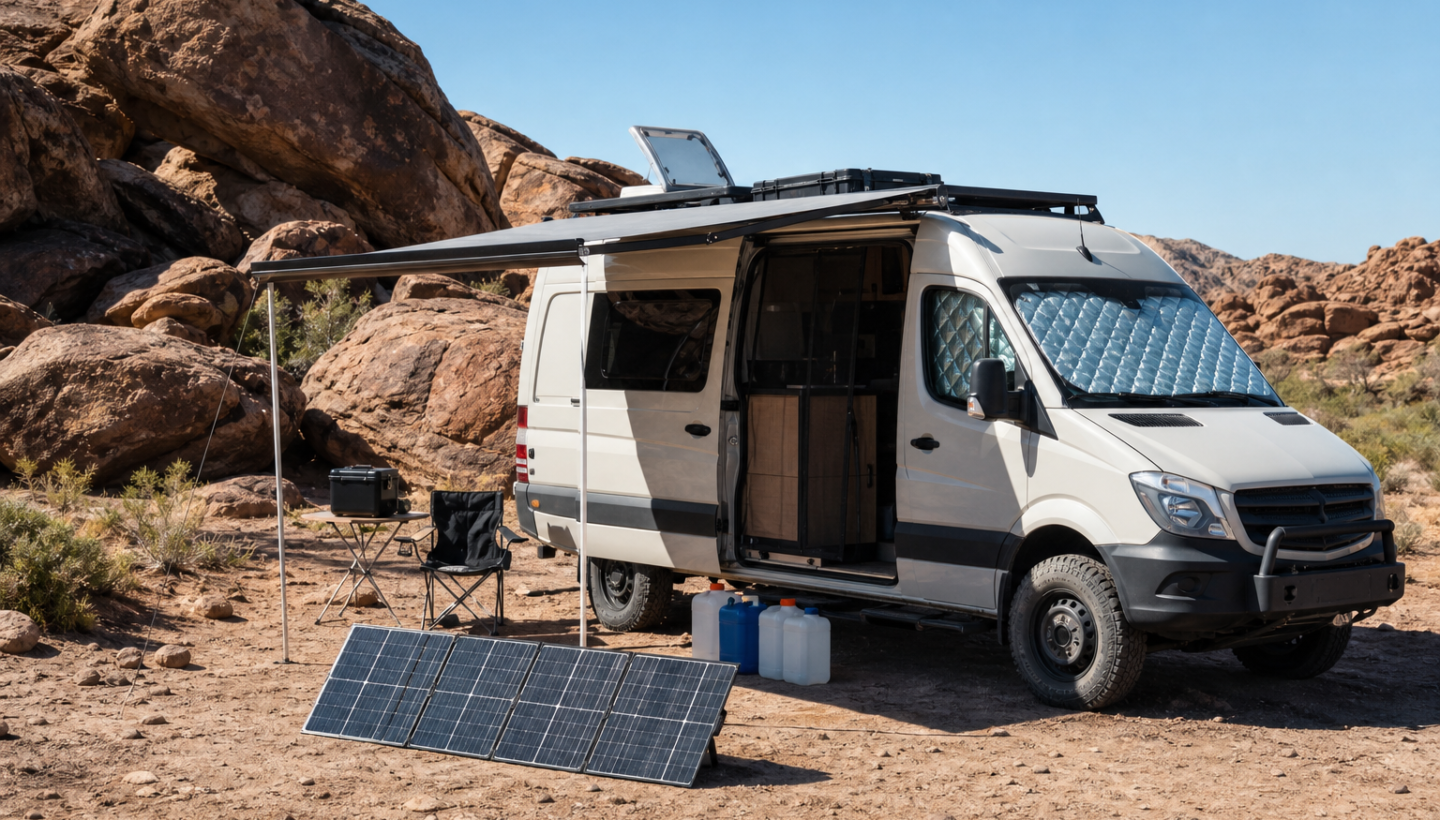
If you have solar panels, balance shade and charging carefully. Full shade may keep the interior cooler but reduce power production. Partial shade, portable solar panels, or repositioning during the day can be a better compromise than leaving the entire vehicle exposed for charging.
Vehicle Ventilation Strategies That Actually Work
Ventilation is not just opening a window. Effective ventilation requires intake, exhaust, and airflow across the spaces where heat accumulates. Hot air trapped near the roof, inside cabinets, under mattresses, and around electronics can make a vehicle feel hotter than the outside air.
Create a Low Intake and High Exhaust
Hot air rises, so the best basic setup is low intake and high exhaust. Crack shaded low windows or vents and use a roof fan to pull hot air out. If your only opening is high, air exchange may be weaker. If your only fan blows air around inside the cabin, it may feel helpful on skin but will not remove stored heat efficiently.
Use screened vents, rain guards, or window inserts so you can ventilate while maintaining security and insect protection. In dusty environments, consider wind direction. Pulling air from the windward side may improve flow, but it can also bring dust inside if you are near a track or dry lakebed.
Vent Heat-Producing Compartments
Refrigerators, inverters, chargers, battery banks, and power stations all produce or accumulate heat. A well-insulated van with a sealed electrical cabinet may look tidy but perform poorly in summer. Make sure these spaces have airflow and that fans are not blocked by bedding, gear bins, or clothing.
If your fridge seems to run constantly, check whether its condenser area has enough ventilation. Many off-grid refrigeration problems are not caused by the fridge itself but by poor airflow around it.
Passive Cooling Before Powered Cooling
Passive cooling reduces your dependence on batteries and fuel. The priority is to prevent heat from entering, remove stored heat when conditions allow, and avoid creating unnecessary heat inside your shelter or vehicle.
- Vent aggressively during cool hours: Open up at night and early morning if temperatures drop. Purge stored heat before the sun rises.
- Close up before peak heat: Once outside air becomes hotter than inside air, reduce openings and block sun-facing glass.
- Cook outside: Stoves, ovens, and boiling water add heat and moisture. Use shaded outdoor cooking when safe and legal.
- Reduce internal loads: Avoid running inverters, chargers, laptops, and unnecessary lights during the hottest part of the day.
- Use breathable bedding: Thick foam mattresses and heavy bedding trap heat. Improve under-mattress ventilation to reduce condensation and heat buildup.
Evaporative cooling can help in dry climates but is much less effective in humid environments. A damp cloth, spray bottle, or evaporative cooler may work well in desert air, but it can make a humid cabin feel worse. Know the difference and adapt.
Reflective Barriers and Insulation
Reflective barriers are useful when they are installed correctly. Their job is to reflect radiant heat before it enters the living space. Window covers, windshield shades, reflective tarps, and awnings can all reduce heat gain, especially when they create an air gap.
For vehicle windows, exterior covers usually outperform interior covers because they stop sunlight before it passes through the glass. Interior reflective shades still help, but the glass itself heats up and radiates inward. If you are building a long-term setup, consider exterior windshield covers, side window covers, and a deployable awning or tarp system.
Do not confuse reflective bubble material with true insulation in every situation. It can be useful as a radiant barrier, but it needs an air space to perform well. Pressed directly against a hot metal panel, it may do less than expected. For walls and ceilings, a combination of insulation, ventilation, and radiant control usually works better than any single product.
Protect Batteries, Electronics, and Power Systems
Heat shortens battery life and can trigger shutdowns or unsafe conditions. Lithium batteries are efficient and popular in off-grid systems, but they still have operating limits. Many lithium iron phosphate batteries are more tolerant than other chemistries, yet they should not be stored in extreme heat or charged outside manufacturer specifications.
Keep batteries out of direct sun, away from engine heat, and out of sealed compartments that trap hot air. If your battery bank is under a bed or inside a cabinet, monitor temperatures there, not just in the main cabin. A cheap temperature sensor in the electrical bay can provide early warning before performance drops.
Electronics need similar attention. Phones, satellite messengers, cameras, drones, laptops, and power stations can overheat quickly on dashboards, black seats, or metal tables. Store critical electronics in the coolest shaded area available. Avoid charging devices in direct sun, since charging itself generates heat.
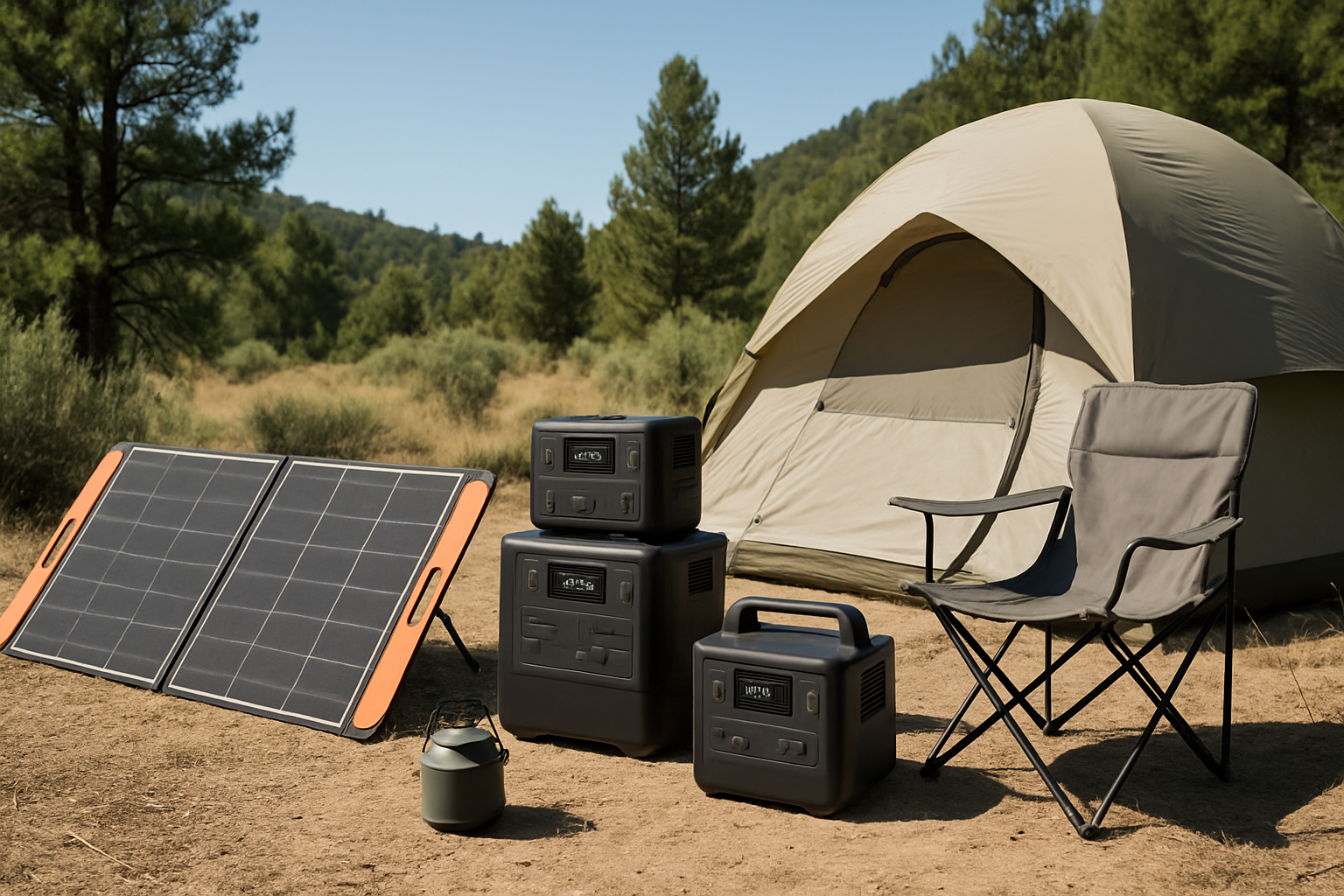
Solar charging also requires judgment. Panels may produce well in full sun, but high temperatures can reduce panel efficiency while the rest of the vehicle heats up. Portable panels allow you to park in shade while placing panels in sun, which is often a superior hot-weather strategy.
Food and Water Storage in Hot Conditions
Heat turns small food-storage mistakes into health risks. Refrigerators and coolers work harder, ice melts faster, and the margin for error shrinks. Keep the fridge full enough to maintain thermal mass, but not so packed that air cannot circulate. Pre-chill food and drinks before loading when possible, and avoid repeatedly opening the fridge during peak heat.
Use a separate drink cooler if you are traveling with a group. Constantly opening the main fridge for water or snacks can raise temperatures and increase power draw. Store high-risk foods such as meat, dairy, and leftovers in the coldest part of the fridge, and use a thermometer instead of guessing.
Water storage needs redundancy. In hot regions, do not rely on a single tank, jug, or bladder. Carry reserve containers that can be moved, rationed, or used if a primary tank leaks. Keep some water in the cabin or shaded storage, not only on an exterior rack where it can become extremely hot.
Plan water based on realistic consumption, not mild-weather habits. Hot-weather travel may require several liters per person per day for drinking alone, plus water for cooking, cleaning, pets, and emergency cooling. If you are traveling in desert terrain, carry more than you expect to use and know where the next reliable source actually is.
Hydration and Personal Cooling
Personal cooling is a system of habits. Waiting until you feel thirsty, dizzy, or overheated is too late. Drink consistently, replace electrolytes when sweating heavily, and eat enough food to support exertion. Overhydrating with plain water while losing salt can also create problems, so use electrolytes intelligently during long hot days.
Clothing matters. Loose, light-colored, breathable clothing with sun coverage often outperforms minimal clothing in intense sun. A wide-brim hat, sun gloves, neck gaiter, and UPF shirt can reduce heat load while protecting skin. In dry climates, wetting a bandana, shirt, or cooling towel can help. In humid climates, prioritize airflow and shade.
Schedule physical work early and late. Tire changes, recovery work, camp setup, water hauling, and hiking are all more dangerous at peak heat. If something must be done in the afternoon, slow the pace, assign shade breaks, and keep drinking water within reach rather than back at camp.
Pet Safety in Off-Grid Heat
Pets are less able to communicate heat stress, and vehicles can become deadly quickly. Never assume a cracked window is enough. If your cooling strategy depends on fans, batteries, or air conditioning, you need a backup plan and a way to monitor conditions.
Dogs can overheat on hot ground, in direct sun, or inside a vehicle even when people feel fine. Check pavement, sand, and rock temperatures before walking. Provide shade, airflow, water, and rest. Know your pet’s risk factors: age, breed, coat type, weight, fitness, and medical conditions all matter.
If you leave pets inside a vehicle, use redundant monitoring and conservative limits. A temperature monitor with remote alerts is useful only where connectivity exists. Battery-powered ventilation still depends on battery state. In remote areas, the safest choice is often to adjust the day’s plan around the animal rather than trying to force a human itinerary.
Desert Travel Considerations
Desert heat requires a different level of planning. Distances are longer, shade is scarce, and breakdowns can become life-threatening. Travel early, rest during peak heat, and avoid pushing deeper into remote terrain when water, fuel, or vehicle condition is marginal.
Before entering desert backcountry, check weather, road conditions, fuel range, tire condition, coolant levels, and recovery equipment. Heat increases stress on tires and engines, especially when driving loaded vehicles on rough roads or sand. Airing down may improve traction, but it also changes tire behavior and heat buildup. Drive with mechanical sympathy.
Carry navigation tools that do not depend entirely on cell service. Tell someone your route and expected check-in time. If you get stuck or break down, staying with the vehicle is often safer than walking, especially in open desert. The vehicle provides shade, visibility, and a platform for signaling.
Emergency Warning Signs
Heat illness can escalate quickly. Early signs include heavy sweating, weakness, headache, nausea, dizziness, muscle cramps, irritability, and unusually rapid heartbeat. Stop activity, move to shade, cool the body, and drink fluids with electrolytes if the person is alert and able to swallow.
More serious warning signs include confusion, fainting, hot dry skin or altered sweating, vomiting, loss of coordination, seizures, or loss of consciousness. These may indicate heat stroke, which is a medical emergency. Begin cooling immediately and seek emergency help. Do not wait for symptoms to “settle down” if mental status changes are present.
Cooling actions can include moving to shade or air conditioning, removing excess clothing, wetting skin, using fans, applying cold packs to the neck, armpits, and groin, and using cool water immersion when available and safe. The priority is to reduce body temperature quickly while arranging evacuation or emergency care.
Key Takeaways
- Prevent heat gain first: Shade, orientation, reflective covers, and timing reduce the workload on every other system.
- Ventilation needs a plan: Use low intake, high exhaust, and airflow around batteries, refrigerators, and electronics.
- Protect critical systems: Monitor battery compartments, fridge temperatures, water reserves, and pet conditions before they become emergencies.
- Adjust your schedule: Work, drive, hike, and recover during cooler hours whenever possible.
- Carry redundancy: Extra water, backup power, independent navigation, and emergency communication are essential in hot remote environments.
Think in Systems, Not Gadgets
The best heat-management strategy is not a single fan, cooler, shade cloth, or battery upgrade. It is a system that reduces heat gain, maintains airflow, protects equipment, preserves water, and keeps people and animals within safe limits. Good decisions made early in the day prevent desperate decisions later.
For modern nomads, overlanders, and off-grid campers, heat management is part of operational discipline. Park with intention. Vent with purpose. Monitor your systems. Respect the forecast. Build margin into your route, water supply, and energy budget. Comfort is welcome, but resilience is the real objective.
Related Resources
- National Weather Service Heat Safety — Official guidance on heat alerts, risk levels, and protective actions during extreme heat.
- CDC Heat and Health — Practical information on heat-related illness, warning signs, and prevention.
- Ready.gov Extreme Heat — Preparedness advice for households and travelers facing high-temperature emergencies.
- American Veterinary Medical Association: Pets in Vehicles — Veterinary-backed information on why parked vehicles are dangerous for animals in warm weather.
- USDA Food Safety and Refrigeration — Food storage temperature guidance useful for managing fridges and coolers off-grid.