A good summer camp kitchen is not fancy. It is a simple field system that keeps cold food cold, separates raw food from ready-to-eat meals, controls flame, keeps hands and surfaces clean, and stores scent items where animals cannot get to them. When those basics are handled, cooking outside becomes calmer, faster, and safer.
Warm weather raises the stakes because food warms quickly, grease fires spread fast, and animals become bold when they learn that campsites mean easy calories. The goal is not to bring a commercial kitchen into the woods. The goal is to build repeatable habits that prevent the common problems: spoiled food, stomach trouble, burned hands, flare-ups, and nighttime visitors.
The Camp Kitchen Safety Mindset
Camp cooking gets risky when people rush, improvise around flame, or handle raw food without a plan. Before packing the cooler, decide which meals actually need raw ingredients and which can be simplified. Pre-cooked sausage, hard cheeses, tortillas, canned beans, instant rice, shelf-stable sauces, and pre-washed produce can reduce the amount of raw-meat handling at camp.
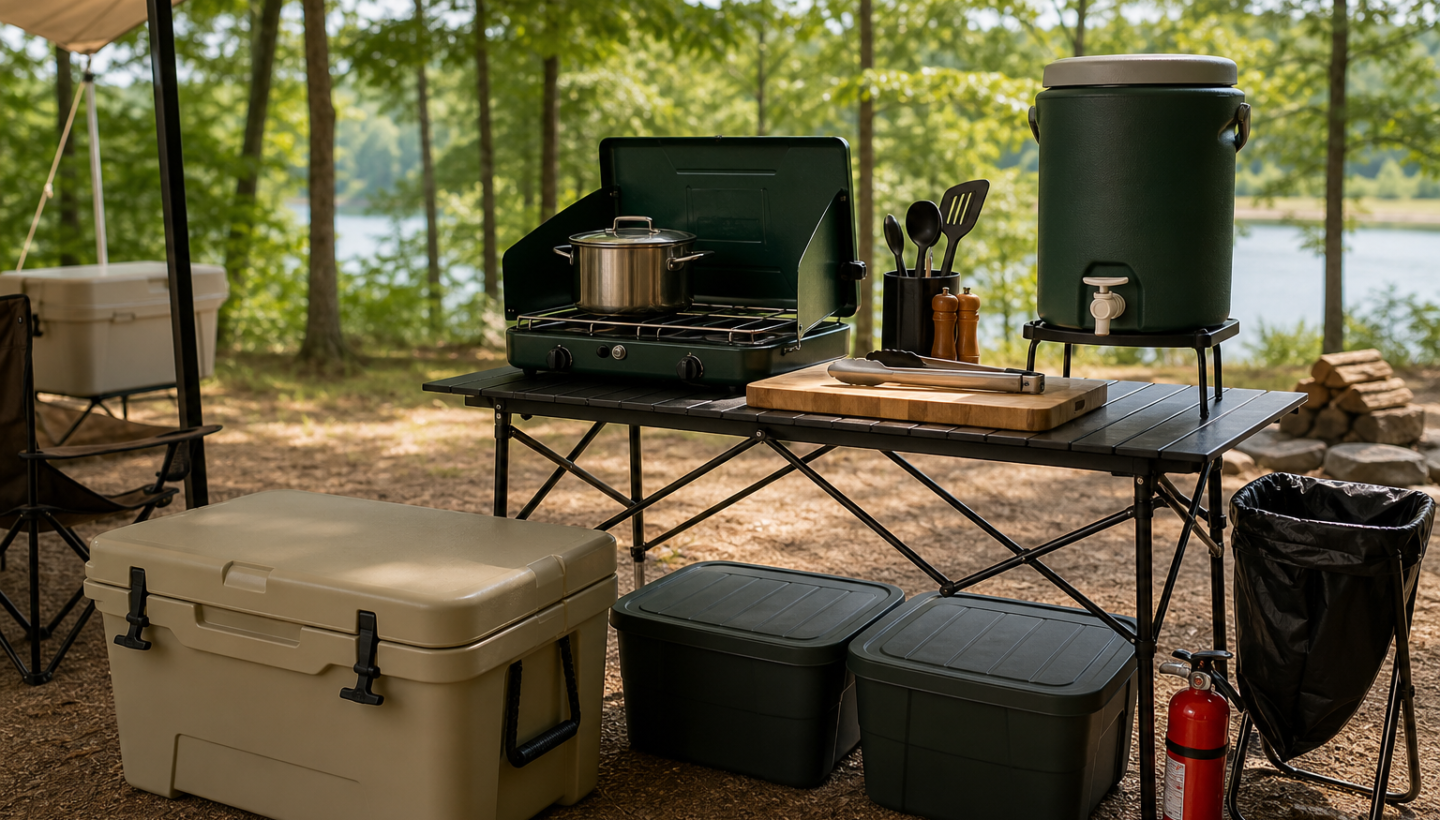
Think of your kitchen as a small work zone. Keep fuel on one side, food prep on another, trash contained, and handwashing within reach. Do not stack gear so tightly that you have to reach across a burner to grab a utensil. Keep knives, hot pans, and fuel canisters out of traffic paths. If children or pets are in camp, establish a clear boundary around the stove and fire area before cooking starts.
Also check local rules before you light anything. Fire restrictions, stove rules, charcoal bans, bear storage requirements, and campground food policies can change quickly in summer. A safe kitchen starts with following the rules where you are, not the rules from the last place you camped.
Cooler Strategy: Keep Cold Food Cold Longer
A cooler is not a refrigerator. It is an insulated box that works best when it starts cold, stays closed, and has enough ice mass to absorb heat. In warm weather, perishable foods should generally be kept at or below 40°F. A small cooler thermometer removes the guesswork. If food has warmed beyond safe limits or you are unsure how long it has been warm, the safest rule is simple: when in doubt, throw it out.
Pre-chill the cooler before the trip if possible. A hot cooler pulled from a garage will waste ice cooling itself down. Add sacrificial ice the night before, then dump it before packing. Pre-chill drinks, meat, dairy, and prepared meals in the refrigerator or freezer. Frozen water bottles can help maintain temperature and become drinking water later.
For longer trips, use both block ice and cubed ice. Block ice melts slower and provides long-term cold mass. Cubed ice fills gaps around containers and cools items quickly. Keep raw meat sealed and below ready-to-eat food so leaks cannot drip onto produce, cheese, or sandwiches. Better yet, use a separate hard-sided container or dedicated cooler for raw meat.
A two-cooler system is one of the easiest upgrades: one cooler for food and one for drinks. The drink cooler gets opened constantly. The food cooler should stay closed except during meal prep. Pack meals in order, with the first meals on top and later meals deeper in the ice. Use waterproof bins, zip-top bags, or gasketed containers to keep meltwater away from food.
Cooler Checklist
- Pre-chill the cooler and food before loading.
- Pack raw meat below or separate from ready-to-eat items.
- Use sealed bins or bags to prevent meltwater contamination.
- Keep a small thermometer in the food cooler.
- Use a separate drink cooler if possible.
- Keep the cooler shaded and out of hot vehicles when practical.
- Open the food cooler less by planning what you need before lifting the lid.
- Drain water only when it helps ice management and does not contaminate food or attract animals.
Food Handling in Hot Weather
Hot weather shortens your margin for error. The general food safety rule is that perishable food should not sit out for more than two hours. In very hot conditions around 90°F or above, that window shortens to about one hour. This includes cooked meat, cut fruit, dairy-based sides, eggs, cooked rice, and leftovers.
Plan meals so the highest-risk foods are eaten early in the trip while the cooler is strongest. Raw chicken on night four of a hot-weather trip is a poor plan unless you have reliable refrigeration. Consider cooking fresh meat on the first night, then shifting to lower-risk meals such as pasta with shelf-stable sauce, foil packets with hardy vegetables, dehydrated meals, canned fish, nut butter wraps, or beans and rice.
Keep raw meat prep contained. Use one cutting board for raw meat and another for vegetables, bread, and cooked food. Color-coded boards or flexible mats make this easy. If you marinate meat, keep it sealed in the cooler and discard leftover marinade that touched raw meat unless it is boiled thoroughly for a sauce. Do not place cooked burgers, fish, or vegetables back on the same plate that held raw food.
Serve food in smaller batches instead of setting everything out at once. Keep condiments, cheese, and cold sides in the cooler until needed, then put them back promptly. Leftovers are only worth saving if they can be cooled quickly and kept cold. If the cooler is struggling, do not gamble on tomorrow’s lunch.
Hand Hygiene Without a Sink
Hand sanitizer is useful, but it is not a full replacement for washing dirty or greasy hands. Camp kitchens need a simple handwashing station. The basic setup is a water jug with a spigot, biodegradable soap where appropriate, a catch basin, and paper towels or a clean cloth. Place it close enough that people actually use it, but keep wastewater away from lakes, streams, and campsites according to local rules.
A foot pump or gravity-fed jug makes washing easier when hands are messy. If water is limited, a small squeeze bottle can help control flow. Keep soap and sanitizer visible rather than buried in a kitchen box. The best hygiene system is the one everyone can use without asking where it is.
Hand Hygiene Checklist
- Wash before food prep and eating.
- Wash after handling raw meat, trash, fuel, pets, fish, or bathroom duties.
- Keep sanitizer accessible at the cooking station as a backup.
- Use tongs and serving utensils to reduce hand contact with shared food.
- Keep towels clean and dry or use disposable towels when group hygiene is harder to manage.
- Separate dishwashing from handwashing so dirty cookware does not contaminate the hand station.
Stove and Fire Control
Most camp kitchen emergencies involve heat, fuel, wind, or distraction. Set stoves on a level, stable surface where a bump will not tip a pot into someone’s lap. Avoid balancing stoves on tailgates, uneven rocks, or soft folding tables that flex under weight. If using a stove table, make sure it can handle the weight of full pots and water.
Wind screens can improve stove performance, but they must be used carefully. Do not trap excessive heat around fuel canisters or stove bodies. Follow the stove manufacturer’s instructions, especially with canister stoves, liquid fuel stoves, and integrated systems. Keep spare fuel away from active burners and never change canisters near open flame.
Safety disclaimer: Always follow manufacturer instructions and local fire rules. Carbon monoxide and fire risk are serious. Never cook inside tents, enclosed vehicles, campers without proper ventilation, or any confined space not designed for cooking. Stoves and grills can produce dangerous carbon monoxide even when they appear to be burning cleanly.
Keep a water bucket, sand, or a small fire extinguisher near the cooking area. Know how to use the extinguisher before you need it. Manage grease carefully: use lower heat when possible, avoid overfilling pans, and keep paper towels, wrappers, and trash away from burners. If a pan flares, do not move it unless you can do so safely. Smothering is often safer than carrying a flaming pan through camp.
Campfire Cooking: When It Makes Sense and When It Does Not
Campfire cooking is satisfying, but it is not always the safest or smartest option. If there are fire restrictions, strong winds, dry grass, heavy leaf litter, or low branches overhead, skip the open fire. Use an approved stove if allowed, or choose no-cook meals.
When campfire cooking is appropriate, cook over coals rather than tall flames. Flames scorch food, create flare-ups, and throw sparks. Coals provide steadier heat. Use a stable grill grate that cannot slide or collapse when loaded with a heavy pan. Wear heat-resistant gloves when moving grates, Dutch ovens, foil packets, or cast iron.
Keep the fire contained in an established fire ring when available. Clear loose debris nearby, keep water ready, and never leave the fire unattended. At shutdown, stir water into the ashes until the fire is completely out and cold to the touch. If it is too hot to touch, it is too hot to leave.
Bear, Rodent, and Camp Animal Food Storage
Animal safety is food safety. Bears get the attention, but rodents, raccoons, foxes, birds, and campground dogs can also destroy gear and spread mess through camp. Store all scented items, not just obvious food. That includes trash, toiletries, sunscreen, lip balm, pet food, cookware with residue, dish rags, empty cans, and snack wrappers.
Use bear lockers where provided. Where required, use approved bear canisters and follow the local agency’s storage rules. In some developed campgrounds, locked vehicle storage may be appropriate and legal; in other places, it may not be allowed or may not be effective. Always follow the rules for the specific area.
Food hanging is not reliable in many places unless it is done correctly and permitted. Many bears and smaller animals have learned to defeat poor hangs. If you do hang food where allowed, use proper distance from trunks and branches, sufficient height, and a durable bag system. Do not improvise a weak hang and assume it is handled.
Never keep scented items in tents. A tent should smell like fabric, sleeping gear, and people, not dinner. Keep snacks out of pockets before bed, and check children’s bags for candy, fruit wrappers, or flavored drinks.
Low-Drama Camp Kitchen Gear That Earns Its Space
The best camp kitchen gear reduces mistakes without adding clutter. You do not need a complicated outdoor kitchen to be safe. You need a few durable pieces that make the right behavior easy.
- Two-cooler system: One for food, one for drinks, to reduce temperature swings.
- Cooler thermometer: A small tool that prevents guessing about food safety.
- Locking food bin: Useful for organizing dry goods and reducing spilled food in vehicles.
- Water jug with spigot: The foundation of handwashing and basic cleanup.
- Compact dish tubs: Helpful for wash, rinse, and sanitize routines where allowed.
- Long lighter: Keeps hands farther from burners and fire starters.
- Heat-resistant gloves: Safer handling for grates, cast iron, and hot lids.
- Stable stove table: A safer cooking surface than balancing gear on coolers or rocks.
- Heavy trash bags: Control waste, leaks, and scent until proper disposal.
- Cutting board set: Separate raw meat from produce and ready-to-eat foods.
- Tongs and serving utensils: Reduce hand contact and make hot food easier to manage.
- Foil: Useful for packet meals, covering food, and simplifying cleanup.
- Small fire extinguisher: Compact insurance for stove and grease problems.
Quick Camp Kitchen Setup Checklist
- Choose a level cooking area away from tent doors, dry grass, and heavy foot traffic.
- Shade the cooler under a canopy, tree, or vehicle shadow when possible.
- Establish the handwashing station before food comes out.
- Separate trash immediately and keep bags closed between uses.
- Confirm animal storage for food, trash, toiletries, and cookware.
- Check wind and fire restrictions before lighting a stove, grill, or fire.
- Place a water bucket or extinguisher nearby and make sure everyone knows where it is.
- Keep fuel away from flame and out of direct sun when practical.
- Set a clean prep zone with cutting boards, utensils, and a place for dirty tools.
- Brief the group on hot zones, handwashing, and where snacks are stored.
Safety Notes for Remote Camps
Remote camps require a little more planning because help is farther away. Know the local rules before arrival, including fire restrictions, food storage requirements, wastewater rules, and trash disposal options. If you are traveling through multiple public lands or jurisdictions, check each one.
Discuss food allergies before the trip, not at dinner. Label shared foods when needed and keep allergen-safe utensils or cookware separate if someone in the group has a serious allergy. If a person carries prescribed emergency medication, they should know where it is and keep it accessible according to their medical guidance.
For burns, the best plan is prevention: stable stoves, gloves, clear work areas, and no crowding around flame. Carry a first-aid kit appropriate for the trip, including burn dressings if you know how to use them. For serious burns, breathing problems, allergic reactions, suspected carbon monoxide exposure, or severe illness after eating, seek professional medical help as quickly as conditions allow.
Before you settle in, know the nearest ranger station, clinic, road access point, or reliable communication location. You do not need to assume something will go wrong. You just need to avoid figuring out basic logistics during a stressful moment.
Key Takeaways
- Keep perishable food at or below 40°F and use a thermometer instead of guessing.
- Separate raw meat from ready-to-eat food with sealed containers and dedicated cutting boards.
- Wash hands with soap and water when they are dirty or greasy; use sanitizer as a backup.
- Control flame and fuel with stable surfaces, clear space, and local fire-rule awareness.
- Store all scented items securely, including trash, toiletries, pet food, and dirty cookware.
- Keep the system simple so everyone in camp can follow it without confusion.
Closing: Keep the Kitchen Boring in the Best Way
A safe camp kitchen should feel almost boring. The cooler stays cold. The stove sits level. Hands get washed. Trash is closed. Food is stored before dark. Nobody has to sprint for water, search for sanitizer, or wonder whether the chicken is still safe.
That kind of boring is valuable. It prevents stomach trouble, reduces animal encounters, lowers fire risk, and keeps the trip focused on the landscape instead of preventable problems. You do not need fear to camp safely in summer. You need a plan, a few dependable tools, and the discipline to reset the kitchen after every meal.
Related Resources
- USDA Food Safety Basics — Practical guidance on safe temperatures, handling, and preventing foodborne illness.
- CDC Handwashing — Clear public health guidance on when and how to wash hands effectively.
- National Park Service: Storing Food in Bear Country — Official guidance on keeping food and scented items away from bears and other wildlife.
- NFPA Camping Fire Safety — Fire prevention tips for campfires, grills, fuel, and outdoor cooking.